History of campaigning against sexual harassment at work

A range of material from the TUC Library on the subject of sexual harassment, 1980s-present.

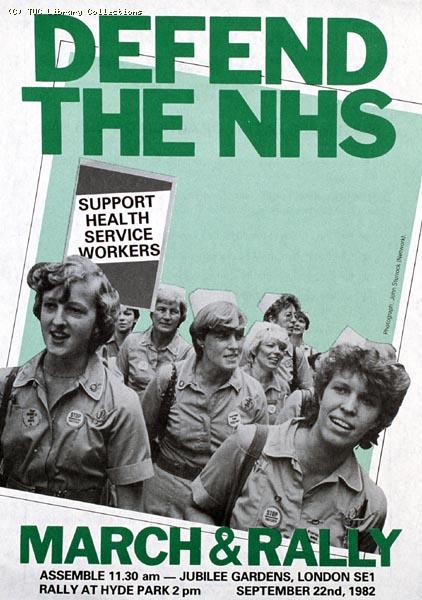
As the media today highlights research undertaken by the TUC that more than half of women report having been sexually harassed at work, the image above shows that it is an issue the trade union movement has been campaigning around for many decades.

The TUC Library contains a collection of reports and leaflets on the subject that date back to the 1970s, when it began to be taken more seriously as a campaigning issue. Our material includes leaflets from the TUC, unions, government departments, the Equality and Human Rights Commission, etc. It also contains other material, such as posters (like this poster from the Local Government Officers union in the 1980s).

We also have the most recent publications from the TUC on the subject, such as this Protection from Sexual Harassment: Know Your Rights guide published earlier this year.

To find out more about the material in the TUC Library, get in touch.

BBC journalists strike – August 1985

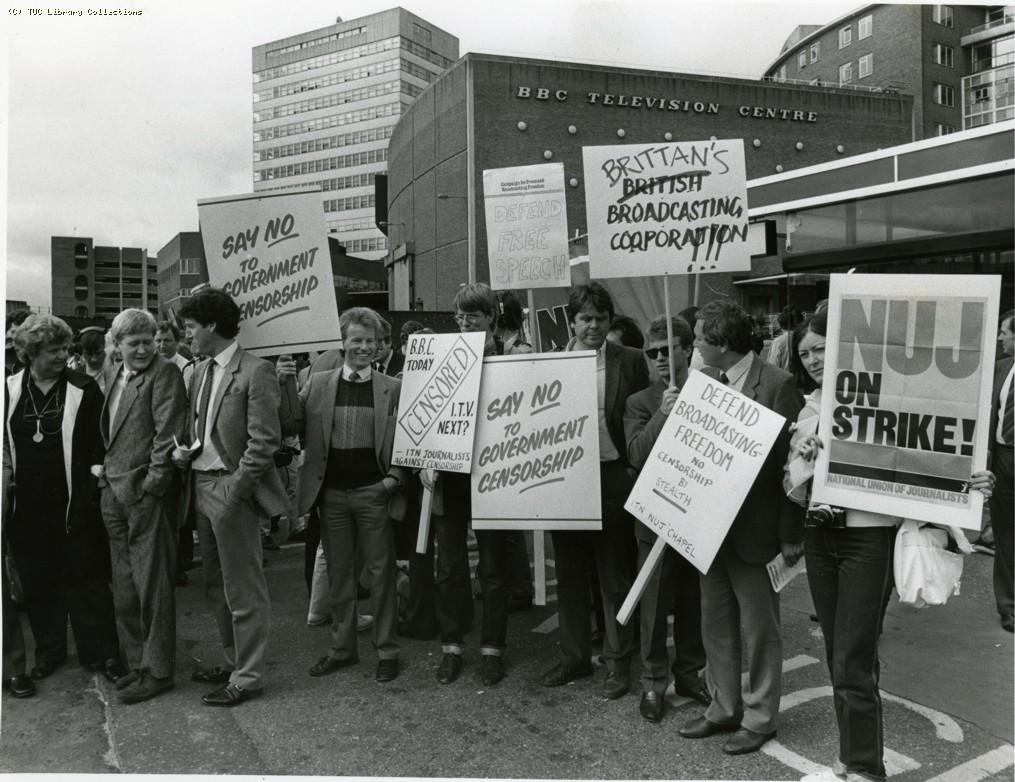
Journalists on strike at BBC Television Centre, August 7th 1985. Copyright: TUC Library

This Sunday (7th August) will mark the anniversary of the National Union of Journalists strike at the BBC in 1985. Journalists walked out on strike in opposition to the decision of the BBC Board of Governors to ban the broadcast of a Real Lives documentary on the issue of Northern Ireland. The NUJ argued that the decision was overt censorship following pressure from the Home Secretary, Leon Brittan. The programme was eventually broadcast with several amendments. The strike included some journalists working at ITN, who struck in solidarity with their BBC colleagues.

The photo above shows (from left): the broadcaster Claire Rayner, radio DJ Mike Smith and BBC presenter Jeremy Paxman, amongst others.


Anniversary of the 1972 dock strike

Painting of the mass demonstration outside Pentonville prison by Dan Jones. Copyright: TUC/Dan Jones

This week marks the anniversary of the 1972 dock strike. During the strike, five dockers – Bernie Steer, Vic Turner, Derek Watkins, Cornelius Clancy and Anthony Merrick – all shop stewards of the Transport and General Workers’ Union, were arrested on the picket line, committed for contempt and put in Pentonville Prison. Thousands of workers in the docks, printing and other industries struck in protest and the TUC called for a one day national stoppage on 31 July. Had this been implemented it would have been only the second general strike in Britain’s history (following the 1926 General Strike).

A mass demonstration in support of the “Pentonville Five” took place outside the prison on 25th July, a scene captured in the above painting by the artist Dan Jones. Following the intervention of the Official Solicitor, the men were released the following day.

To find out more about the TUC Library and the material in contains, get in touch.

Syracuse University Students Get A Historical Education at the TUC Library

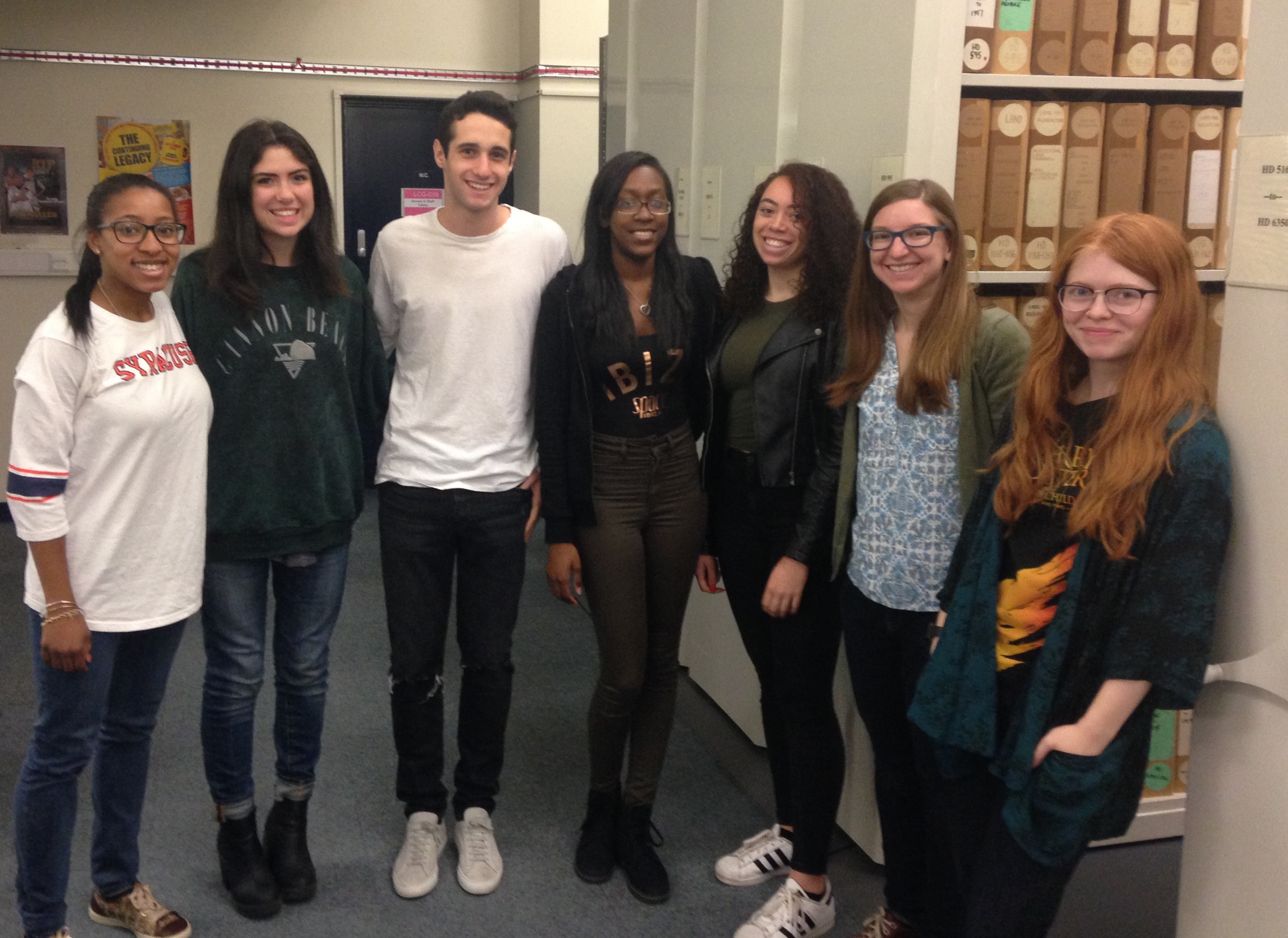
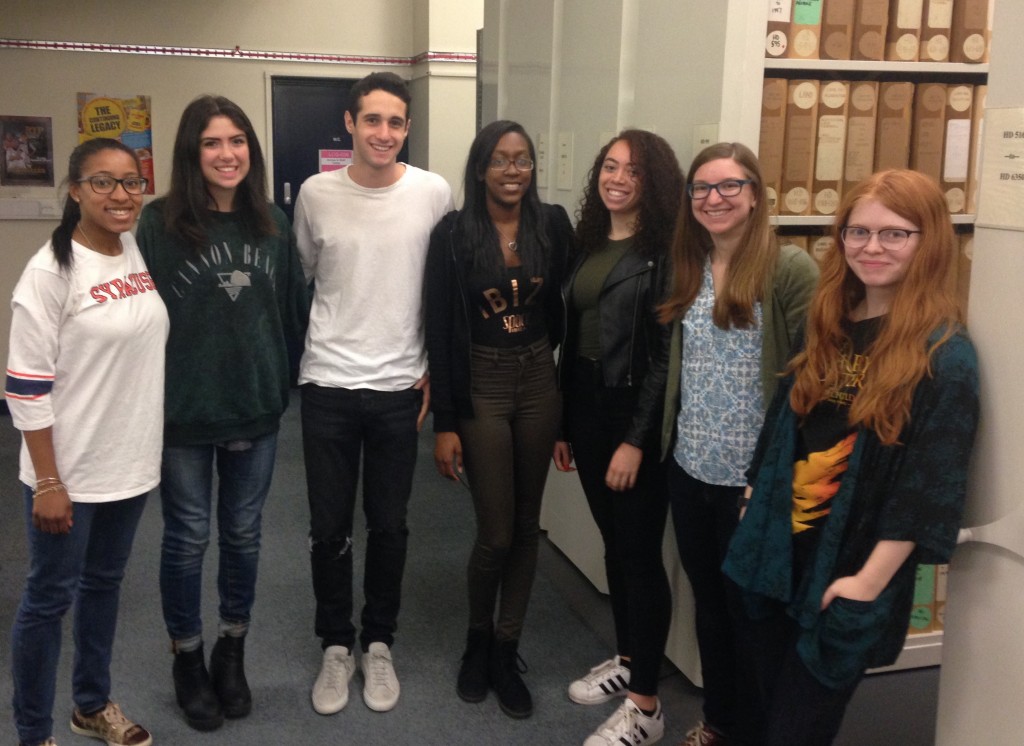
Students from Syracuse University, with their tutor Jess Pauszek (second from the right).

This summer students from Syracuse University, New York, have been visiting the TUC Library to assist with the cataloguing of our archive deposit from the Federation of Worker Writers. Syracuse academics Steve Parks and Jess Pauszek report on their visit:

The Federation of Worker Writers and Community Publishers (FWWCP) Collection, housed at the TUC Library, represents a unique self-written and self-published history of the British working-class in the late 20th century. Developed through over 100 writing/publishing groups located across the United Kingdom, these publications move from an industrial-based working class with principally a European heritage to a working class identity that is globalized and situated within a nuanced ethnic/gender framework. As Syracuse University Professor Steve Parks has written, “The FWWCP represents one of the most significant working class projects of the 20th century.”

And it is for this reason, that Syracuse University professor Steve Parks and Humanities Fellow Jessica Pauszek have spent the past two years bringing students from their university to help develop the FWWCP Collection at the TUC Library, London Metropolitan University. The Collection itself began with a significant donation from FWWCP member Nick Pollard, but has now expanded to include donations from the other members, with the total number of books now surpassing 4,000. In addition to these publications, the Collection houses archival materials such as minutes, constitutional documents, annual reports, newsletters, magazines, and broadsheets from the group’s Executive Committee, member groups, and individuals within the organization. Although the FWWCP ended in 2008, a new iteration of this group formed as The FED: A Network of Writing and Community Publishers, which continues to produce the FED Festival each year and remain active through writing groups, online writing challenges, and additional writing activities: http://www.thefed.btck.co.uk

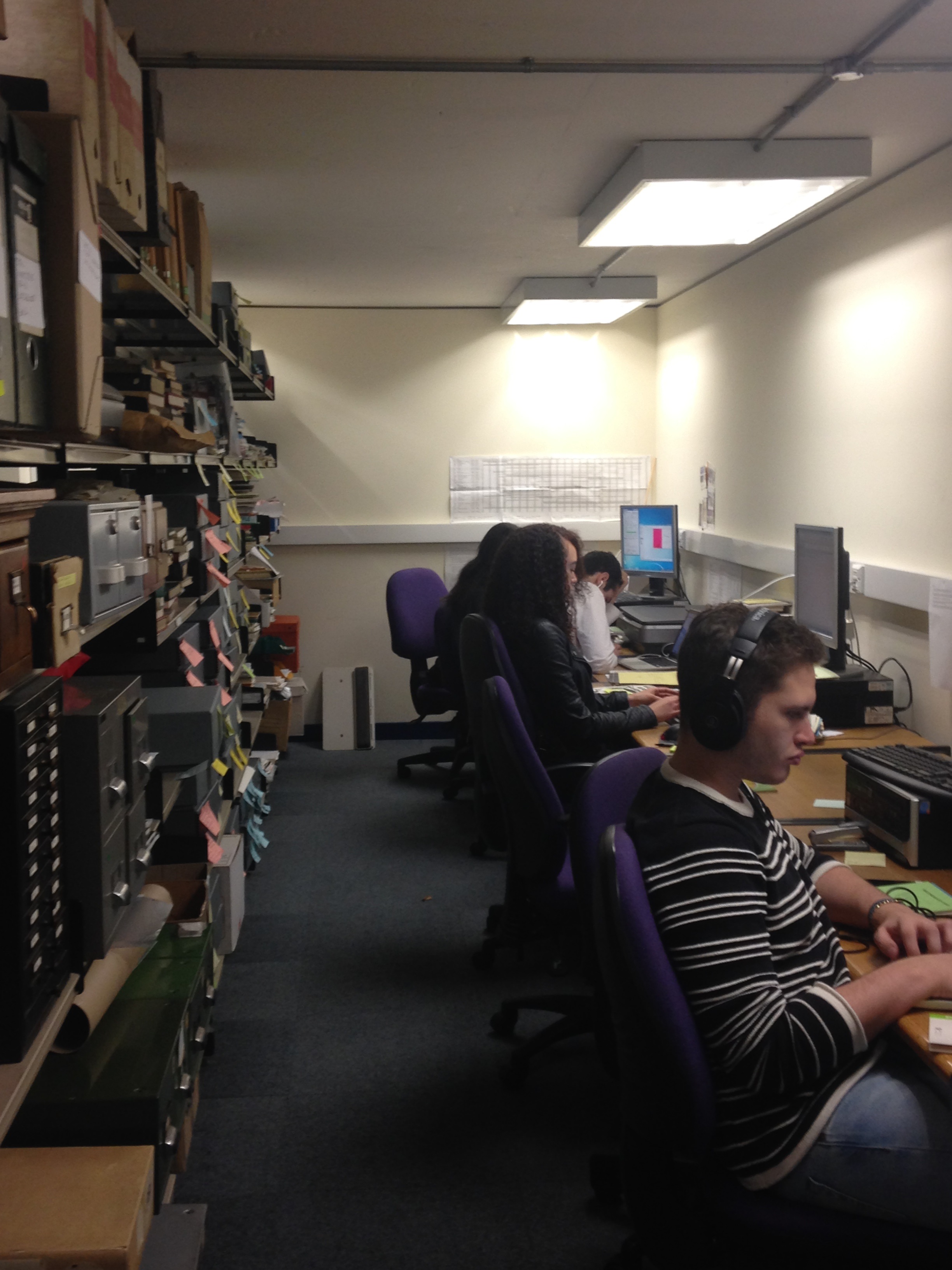
Over their five-week-stay in London, Syracuse University students worked with Jeff Howarth, TUC Academic Liaison Librarian, to sort through books, flyers, and organizational documents developing a database of close to 2,000 listings. In the process, they attend the “Fedfest,” met FWWCP and FED members, and collaborated on a new publication bringing these different audiences into dialogue.
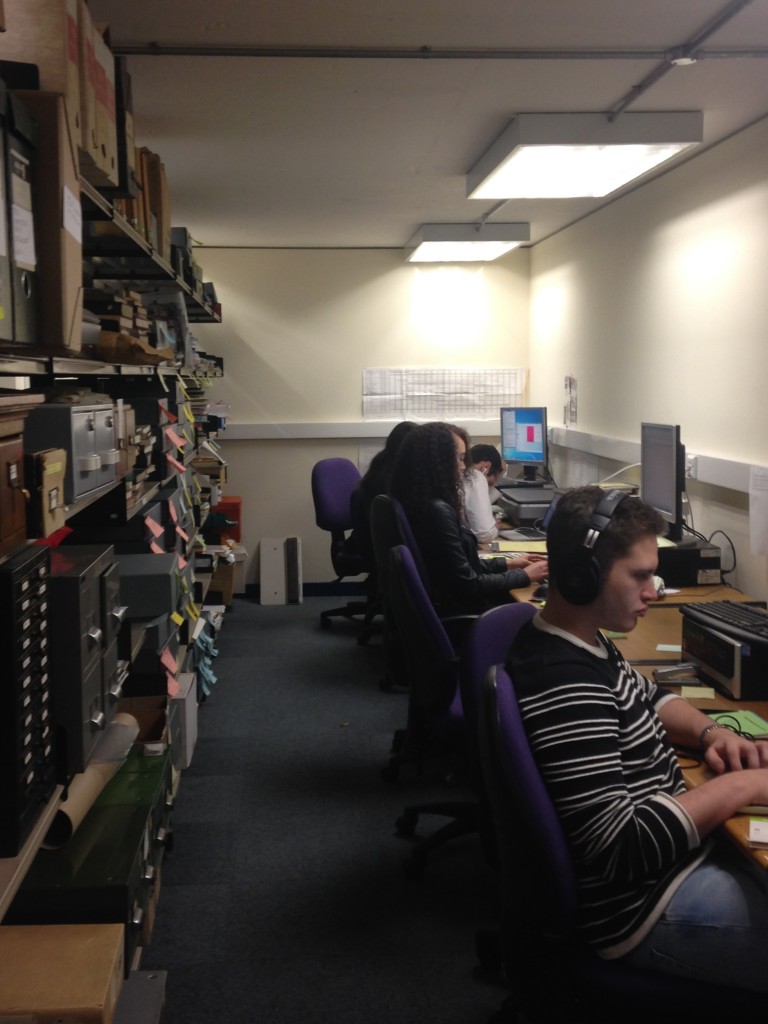
Syracuse students working on the collection

The next stage of the project will be to take this database and turn it into a digital reference guide, available to anyone who wishes to see what rich materials are in the archive. Ultimately, the goal is to not only have a listing of books, but digital copies for download. In this way, the hope is to return (in digital form) the books back to the community in which they originated.

Given the strong academic and pedagogical support provided by the TUC Library, Parks notes that he “intends to continue bringing students to the TUC Library to work on the FWWCP materials, since by doing so they not only develop a rich sense of British history, but can also gain a true sense of the role of archives in documenting and creating that history.”

Ada Salter Day – Saturday 16th July

This Saturday Southwark and Bermondsey in south London mark the 150th anniversary of the birth of Ada Salter (1866-1942) – social reformer, pacifist, Quaker and first woman mayor in London.

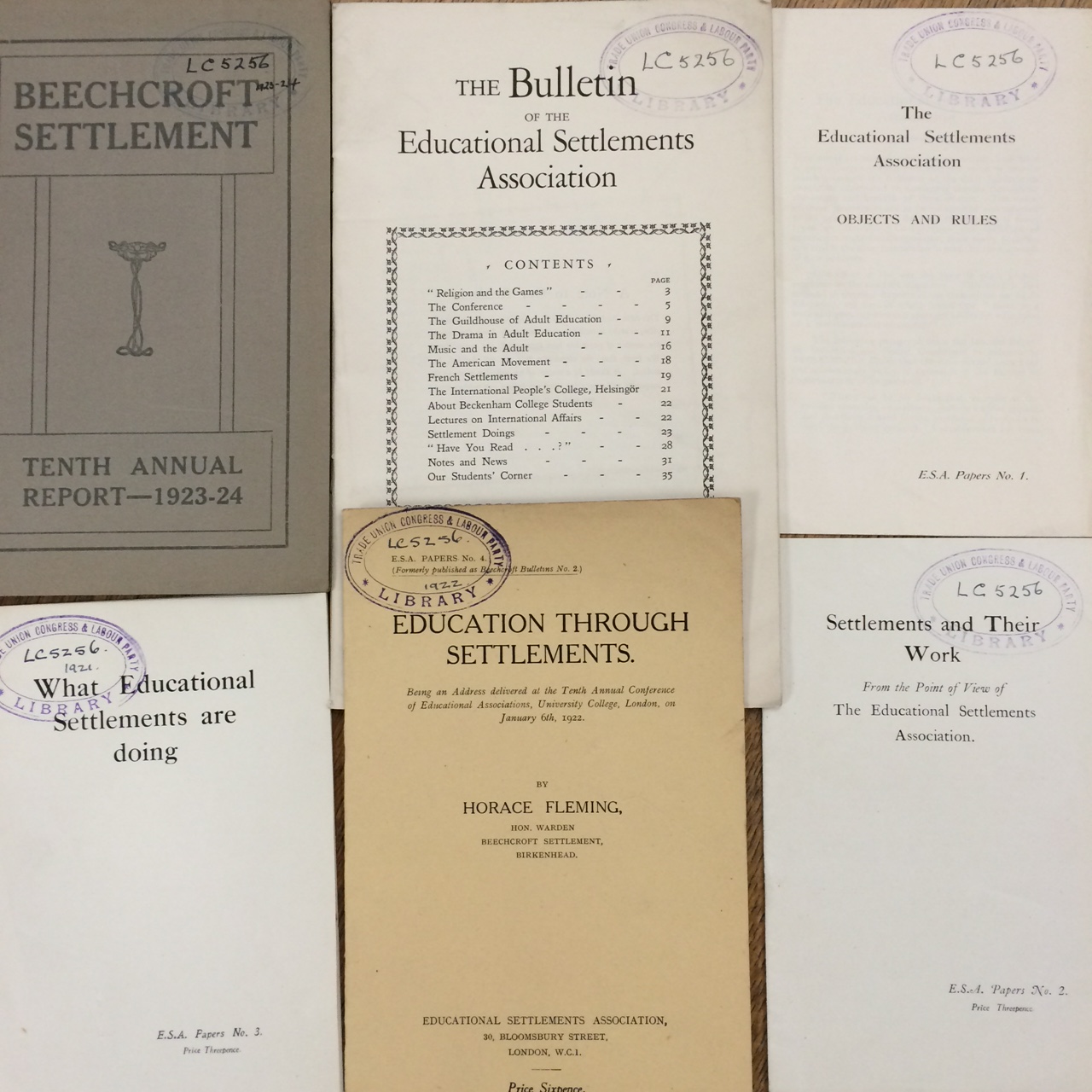
Salter moved to Bermondsey in 1897 to take part in the Settlement Movement, a form of social reform that advocated the mixing of social classes and the provision of health and educational services in settlement houses located in poor areas. The TUC Library has a collection of material related to the educational settlement movement:

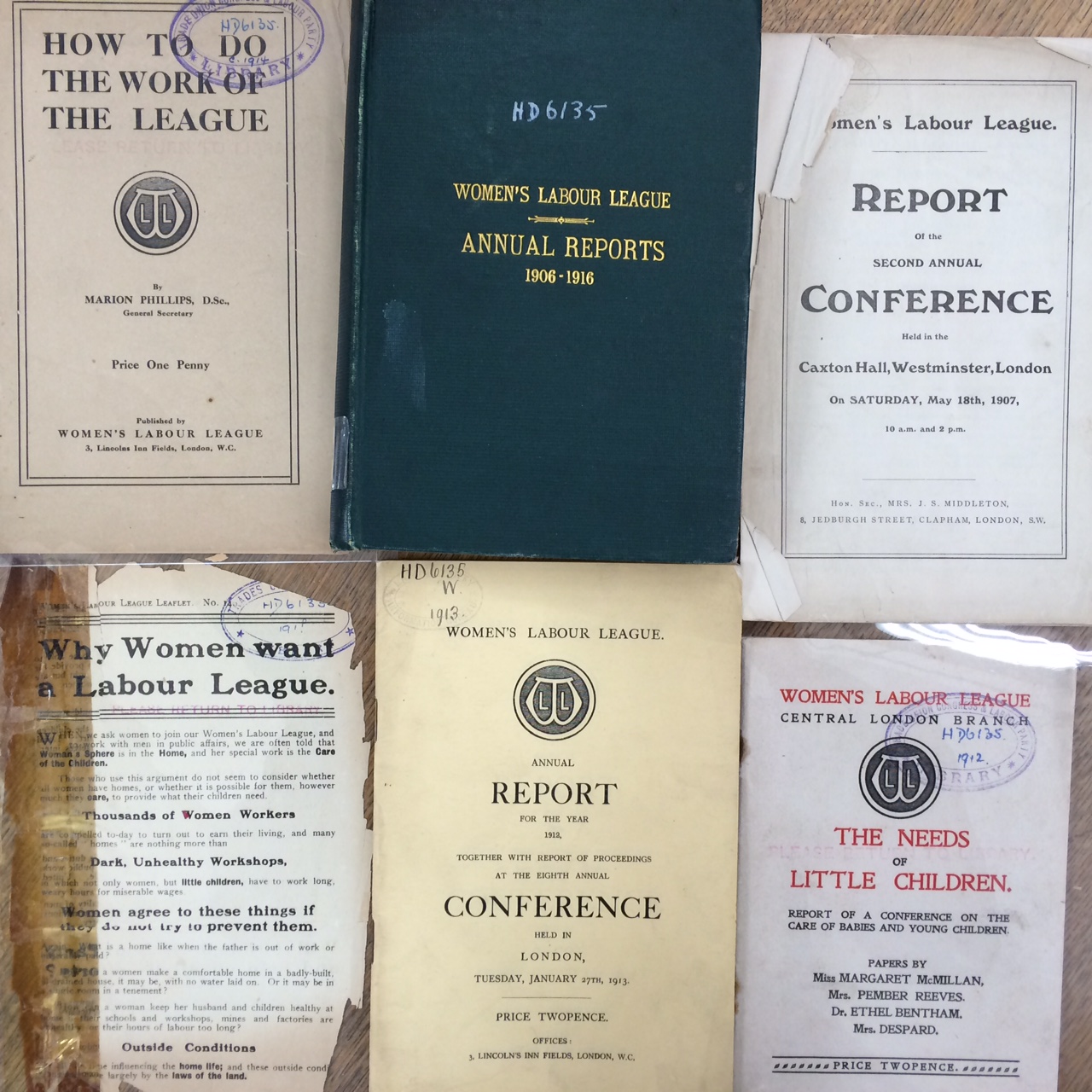
Salter was also politically active, first with the Liberal Party, but later with the Independent Labour Party. In 1906 she co-founded, and was later President of, the Women’s Labour League. The TUC Library holds a collection of the League’s reports and publications, along with those of similar organisations with which it worked, such as the National Federation of Women Workers:

Salter was active in Bermondsey during the spate of strikes that erupted in 1911. The image below is from our Union Makes Us Strong website and shows a strike at Pink’s jam factory in Bermondsey in 1911:

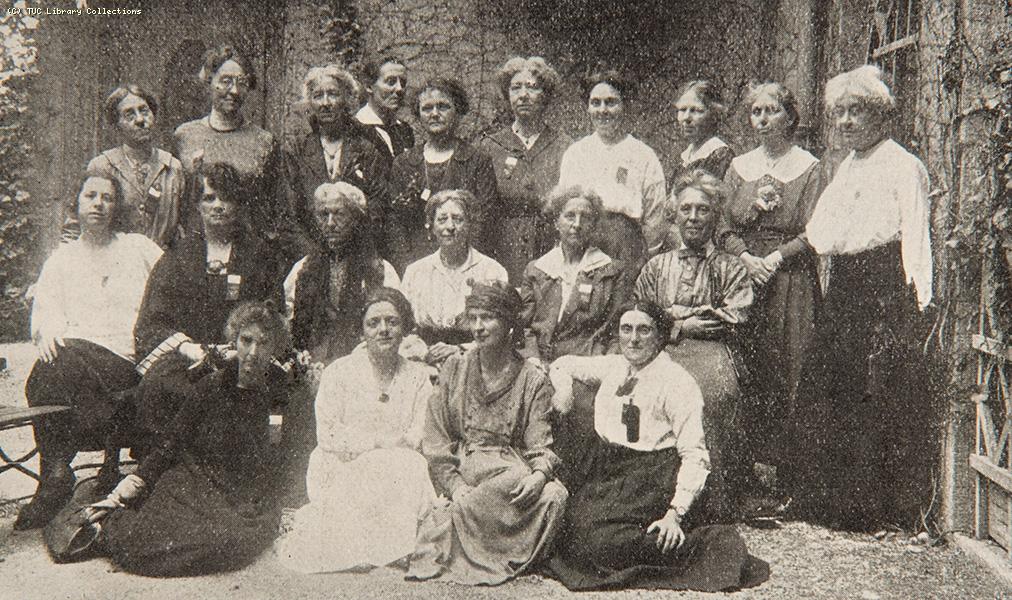
As an internationalist and pacifist, Salter was also involved in the foundation of the Women’s International League for Peace and Freedom in 1915. The photo below includes Salter at the second congress of the League in 1919:

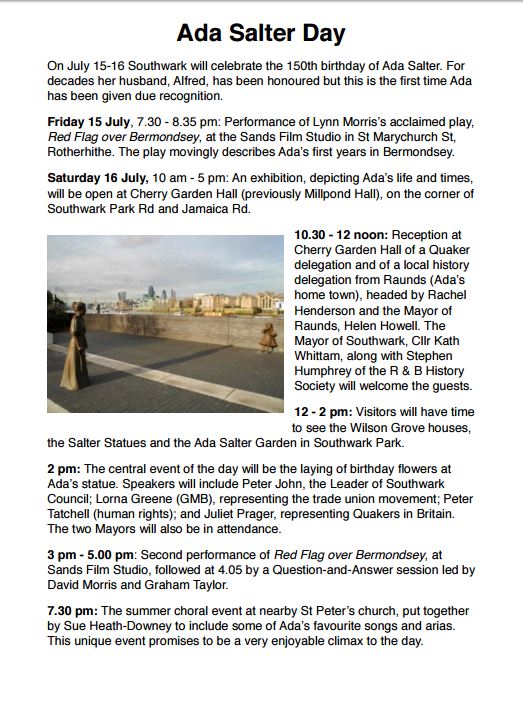
Events to mark Salter’s anniversary start on Friday evening and continue during the day on Saturday. A full programme can be seen by downloading the flyer here.

For more information about the TUC Library’s material, get in touch.


General Election – 5th July 1945

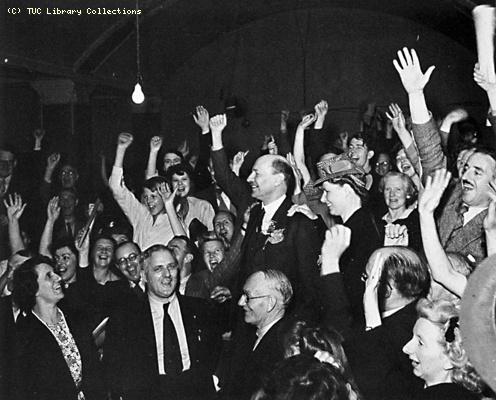
Labour leader Clement Attlee celebrating victory on election night, 1945

Seventy one years ago today (5th July) the UK went to vote in the 1945 General Election, which resulted in an unexpected landslide for the Labour Party.

The TUC were heavily involved in the tri-partite negotiations that implemented the new Labour Government’s manifesto programme of full employment and expansion of the welfare state as recommended in the Beveridge Report. The TUC Library therefore contains an extensive collection of material related to the social policy areas of the time: unemployment; foundation of the NHS; education; expansion of National Insurance; housing policy.

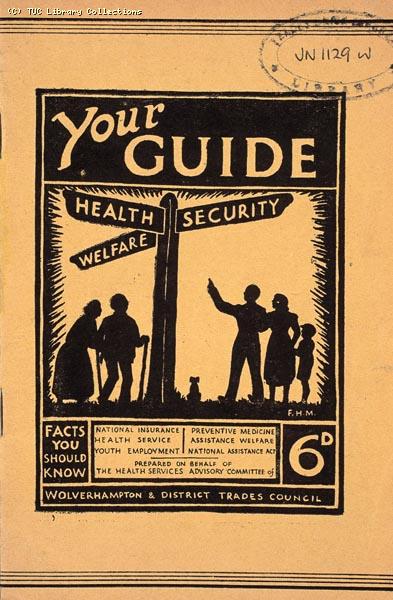
Leaflet explaining the new welfare state services, produced by Wolverhampton and District Trades Council, 1949

For more information about the items shown, or anything else the TUC Library contains, get in touch.


Matchworkers strike – July 1888

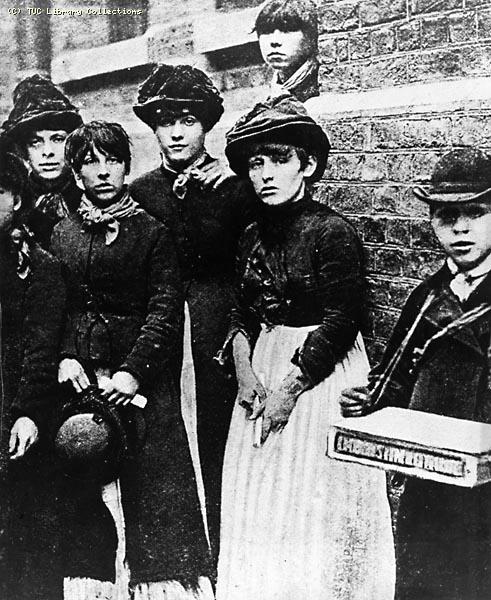
Some of the young matchworkers who took part in the strike, 1888.

It was in early July 1888 that the young matchworkers of the Bryant & May match factory in Bow in the East End of London walked out on strike. Some of the workers had been speaking to journalist Annie Besant some days earlier about the terrible sanitary conditions in the factory. The use of a toxic form of phosphorous in the match making process resulted in the workers developing “phossy jaw” as the chemical contaminated the bones of the face.

When the factory owners sacked a number of employees for speaking to the journalist, hundreds of the workers walked out on strike. A strike fund register was set up, to distribute the donations that poured in from the public after Besant highlighted the plight of the workers in the press. You can see a digitised version of the stike fund register, which is deposited at the TUC Library, on our website here. You can also find more information about the history of the strike on our website here.

European Referendum – 2016 vs 1975

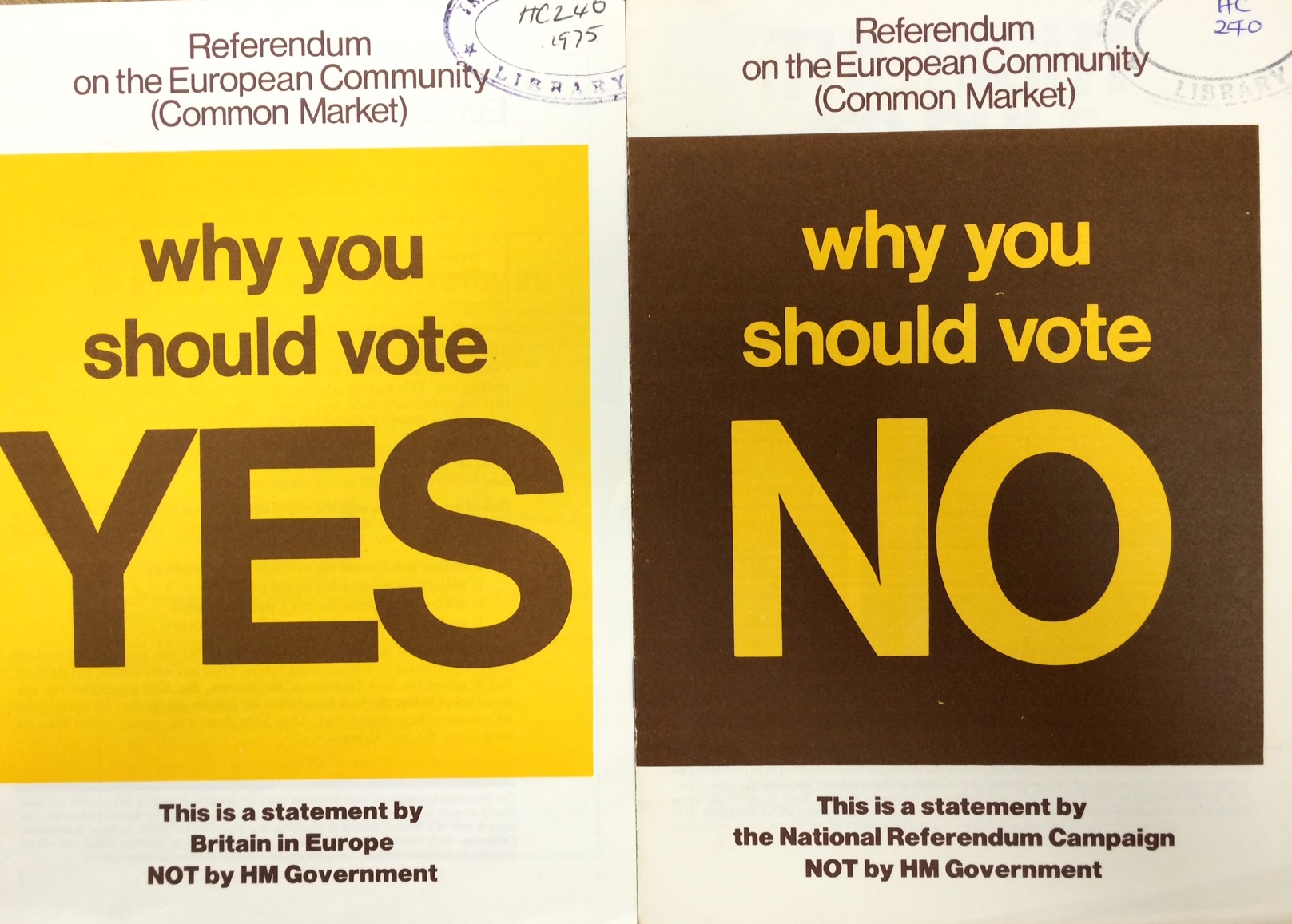
Campaign leaflets from the Yes camp (Britain in Europe) and the No camp (The National Referendum Campaign)

As the country comes to terms with the implications of the historic decision to leave the EU, it’s useful to compare the referendum campaign debate with that of the 1975 referendum on continued EEC membership.

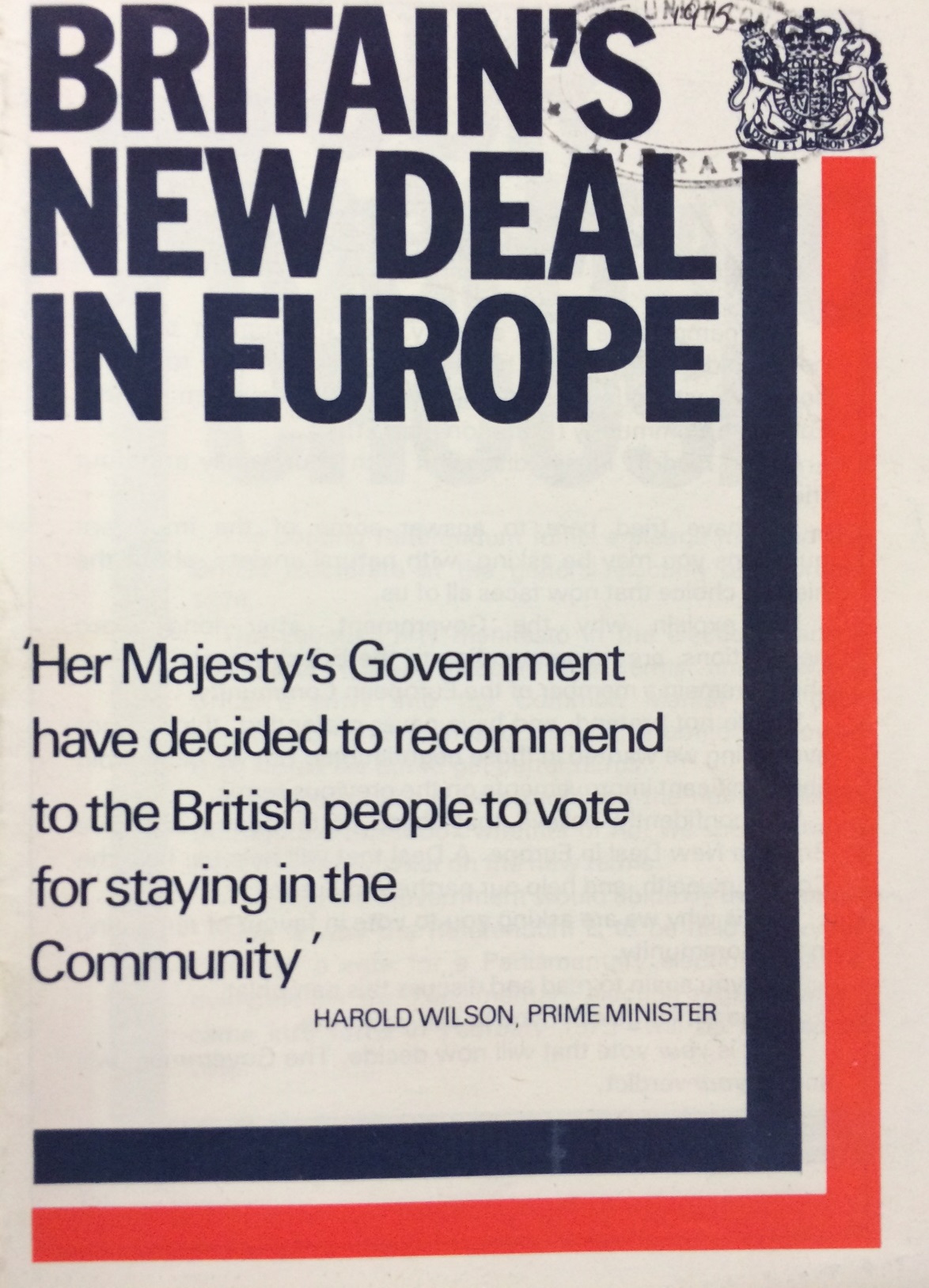
Official Government leaflet sent to every household in the UK, 1975

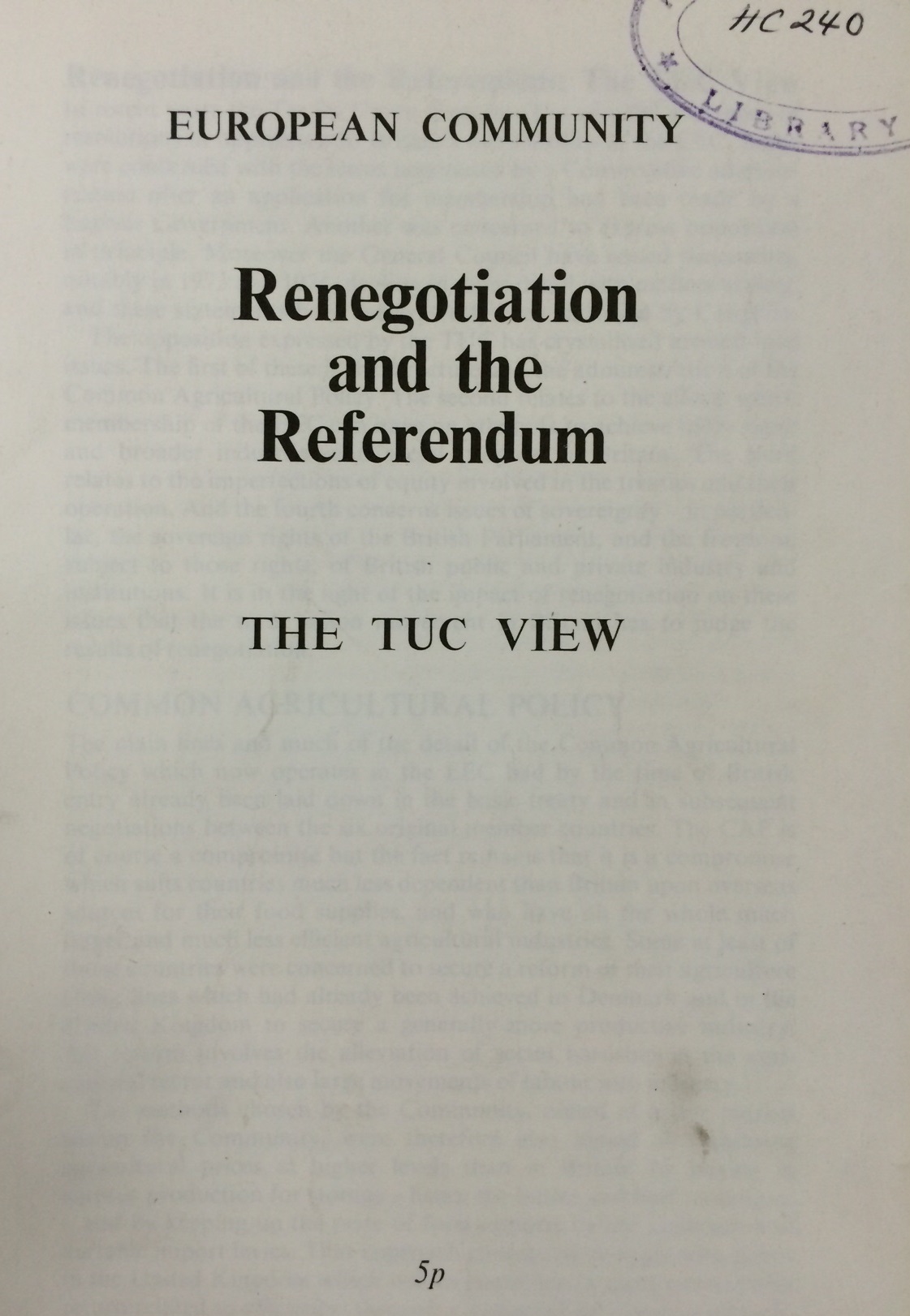
The TUC view on the referendum, April 1975. The document did not officially back either the Yes or No camp, but raised various concerns with the EC renegotiation and leant towards the No position.

The TUC Library contains a unique collection of material from the 1975 referendum, including the original legislation, the campaign literature from the Yes and No camps, and the official view of organisations such as the TUC, the trade unions, the Government, the Labour Party, etc.

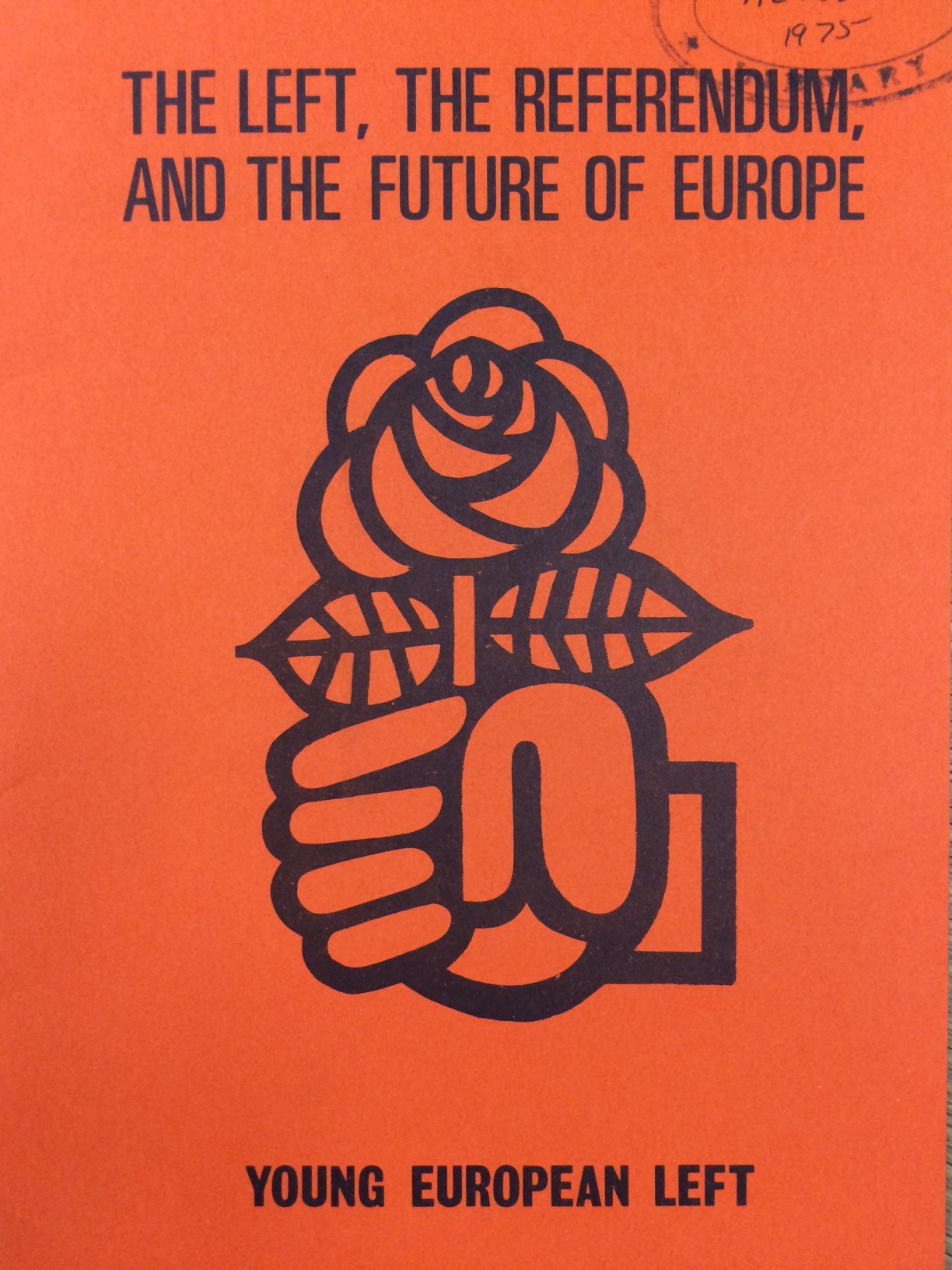
As with the current referendum, there were big differences of opinion on both sides of the Yes and No campaigns in 1975. The TUC had opposed joining the EEC in 1973 and during the referendum leant towards the leave camp. Many in the wider labour and trade union movement also wanted to leave the EEC, although the official view of the Wilson Government was to remain (see above). But there were also divisions within the left, particularly on demographic lines. The organisation Young European Left campaigned for a decisive vote to remain, as it believed it was in the best interests of Britain’s young people (see below).

Leaflet produced by Young European Left, 1975

For more information about the items featured, or any other material the TUC Library holds, get in touch.

TUC Library exhibition at the Radical Histories conference, 1st – 3rd July

The TUC Library’s recent exhibition “Solidarity and the Miners Strike, 1984-85” will be on display at the Radical Histories/Histories of Radicalism conference at Queen Mary, University of London from Friday 1st – Sunday 3rd July 2016.

Themes include: the history of radicalism; utopian and protest movements; radical education; politics of housing; radical art; peace activism.

More information about the conference and how to register to attend can be found here.

1982 – miners strike in solidarity with NHS workers

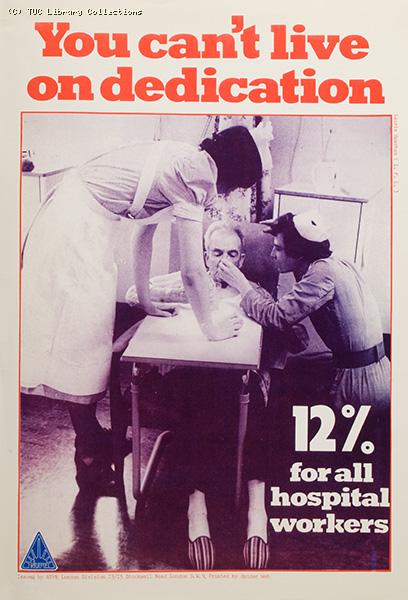
National Union of Public Employees (now UNISON) poster during the 12% pay campaign, 1982

On this day in 1982 (16th June) miners in the South Wales collieries went out on strike in solidarity with NHS workers who were campaigning for a 12% pay rise. For several years prior the inflation rate had been running at 12% or above and the miners felt they were involved in a similar battle with the Conservative government over pay negotiations.

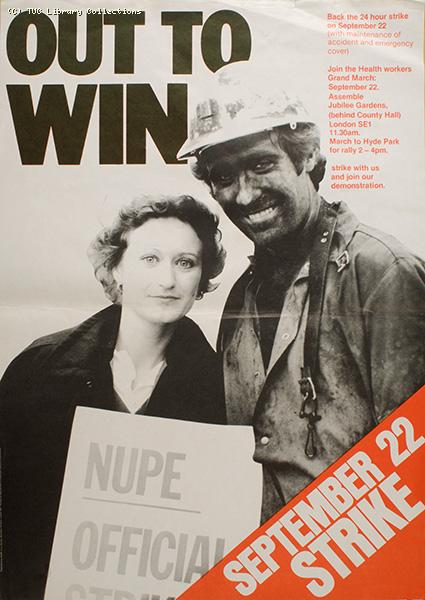
The pay demands continued throughout the summer and in September the TUC organised a “Defend the NHS” rally and Day of Action. With the intervention of ACAS an agreement was eventually reached later in the year.

TUC poster promoting the 22nd September Day of Action

TUC poster promoting the 22nd September Day of Action

To find out more about this strike, or anything else the TUC Library holds, get in touch.