Comics and your Children. Moral Panic!

Campaign against comics

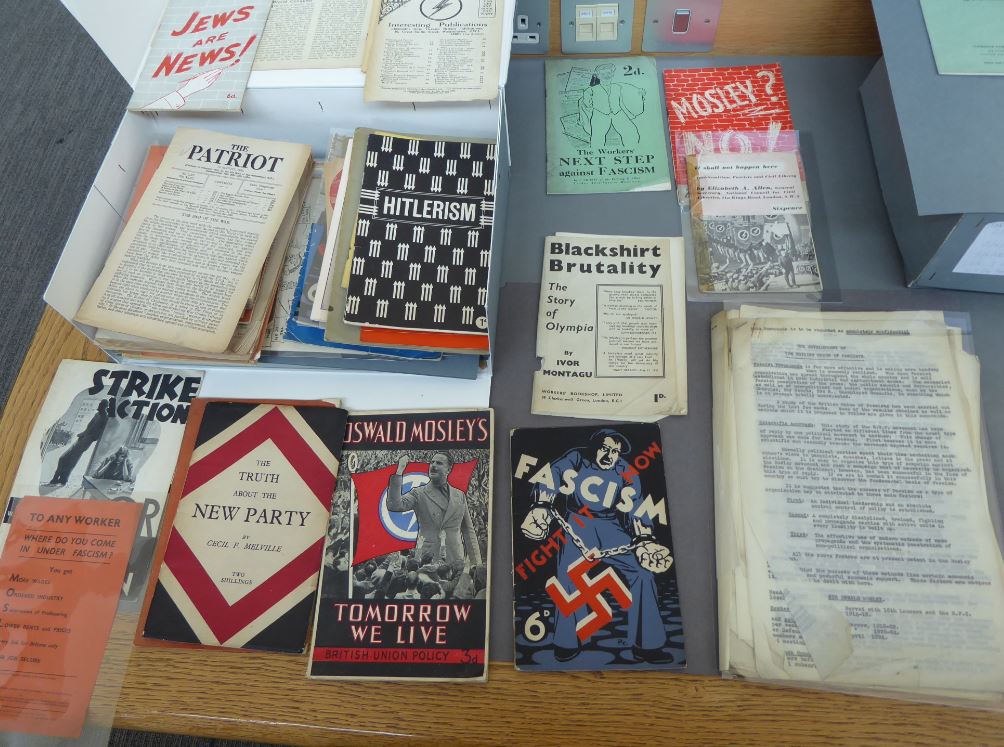
What are your children reading? Moral panic! We came across this pamphlet from the Comics Campaign Council in 1954. This must have been one of their first publications as they were set up the year before in 1953 concerned about the bad influence of imported American comics.

Their work helped lead to the government legislating with the Children and Young Persons (Harmful Publications) Act 1955.

Ragged Trousered Philanthropists

Manuscript

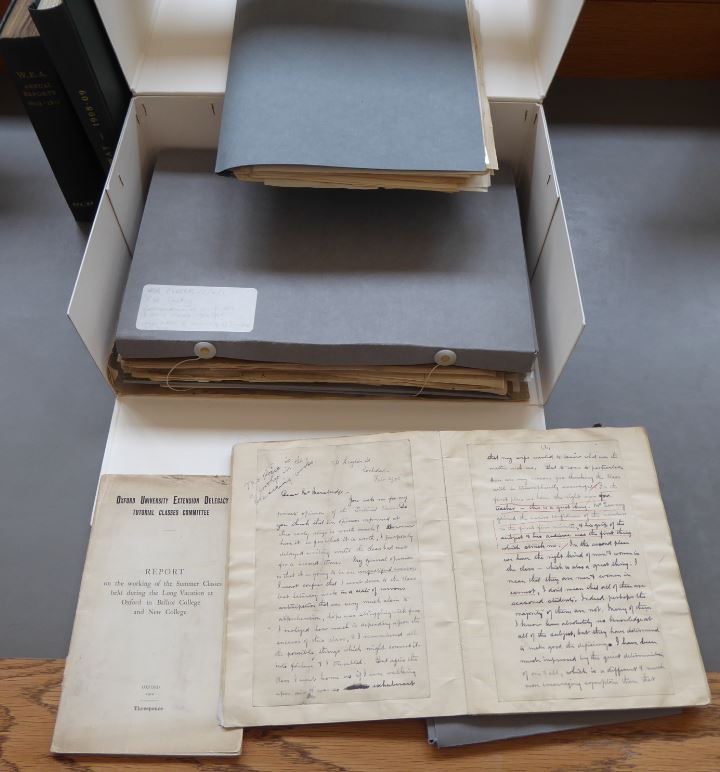
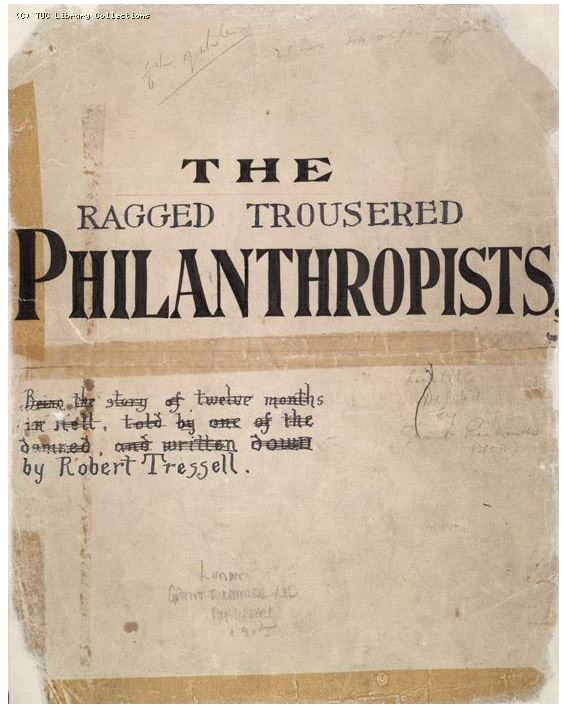
The TUC Library featured in the final episode of the BBC2 series The Novels That Shaped Our World which was focused on class (10pm, Saturday 23rd November). We have the original, hand-written manuscript of the iconic working class novel The Ragged Trousered Philanthropists by Robert Tressell and the production company that made the series came in to film it and interview academic Ian Haywood of Roehampton University.

The manuscript was digitised and can be found on our website along with biographical information about the author Robert Tressell.

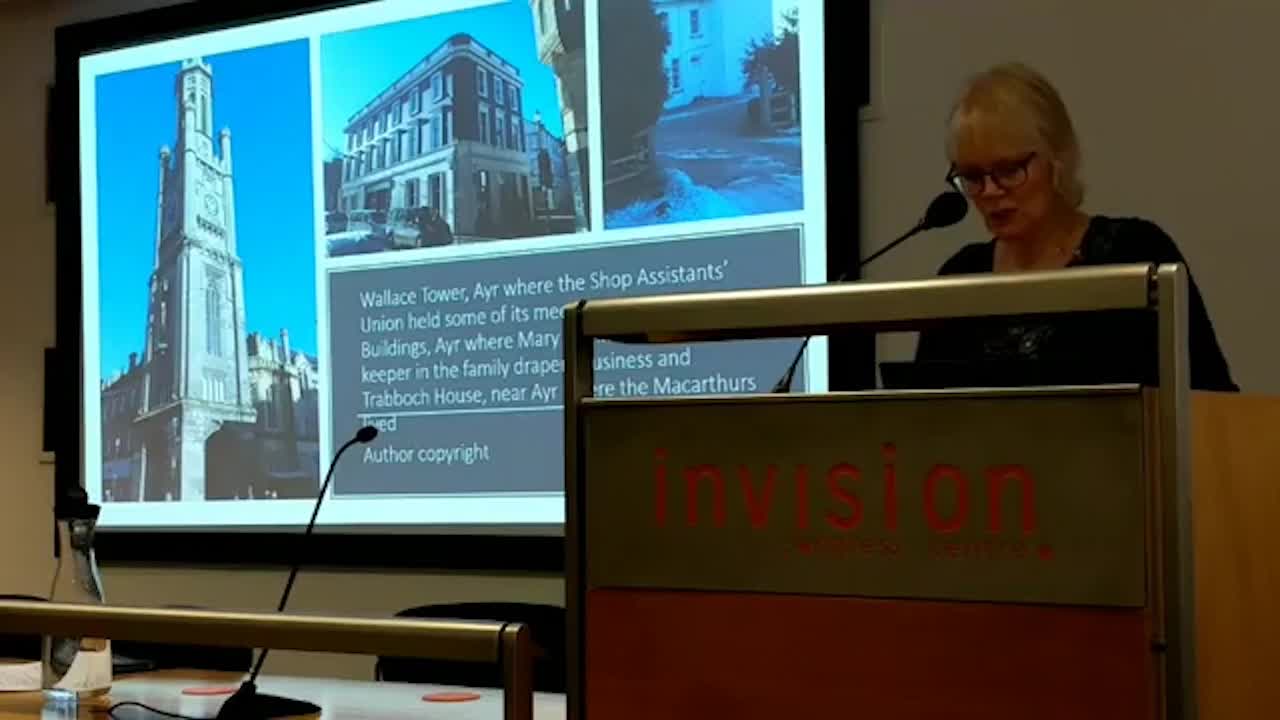
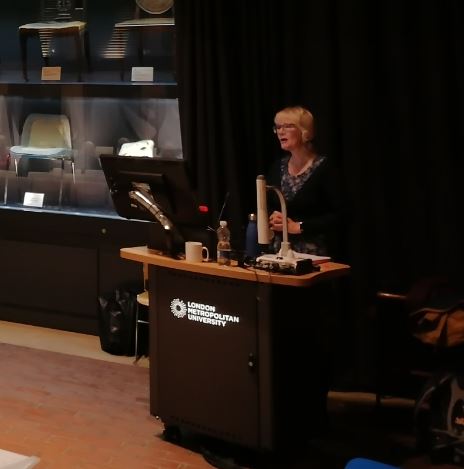
Cathy Hunt presentation on 21st November

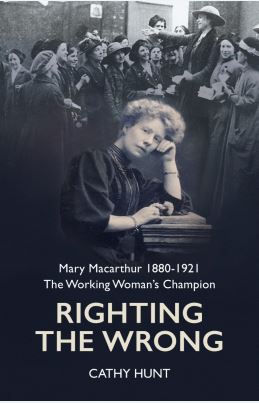
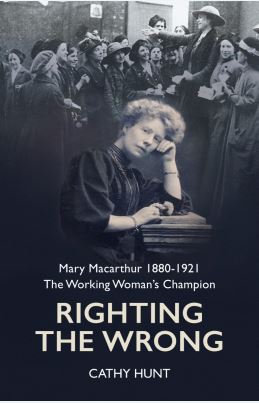
Righting the Wrong book coverOn Thursday 21st November 2019 6.30pm author Cathy Hunt will make a presentation based on her recently launched biography of trade union activist Mary Macarthur.

Cathy will explore Mary’s unlikely and meteoric journey from Victorian middle-class girlhood to dynamic tour de force on picket lines, public platforms and fearless negotiations with government ministers. She was one of the most brilliant trade unionists that Britain has ever seen and when she died in 1921, she was widely regarded to have done more for women workers than any other leader in the labour movement.

This event is open to University staff, students and the public. No booking required.

Main Hall in the Wash Houses, entrance from University reception at Calcutta House on Old Castle Street, E1 7NT

Cathy carried out research at the TUC Library which is housed at London Metropolitan University. Visitors are welcome to drop in on the Special Collections Reading Room beforehand. The reading room is on the second floor of the Wash Houses and is open till 7pm.

The presentation is approximately one hour. Enquiries to j.howarth@londonmet.ac.uk

Women’s International League for Peace and Freedom Zurich meeting May 2019

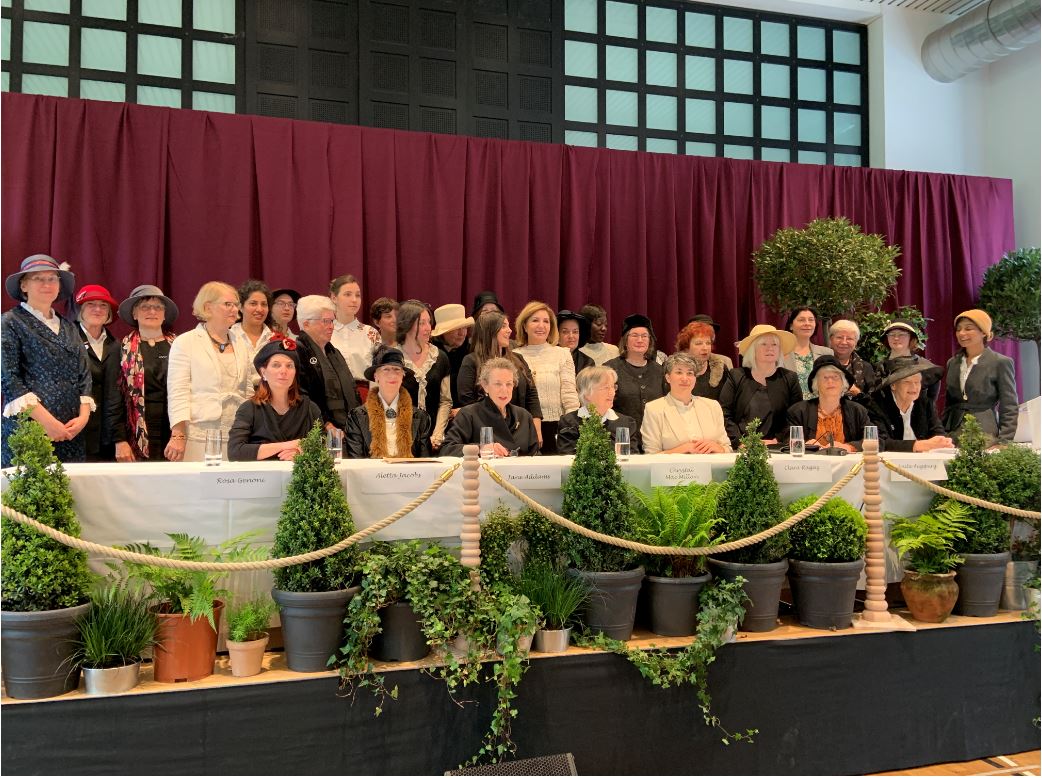
Delegates at the 2019 meeting in Zurich. Helen is 4th from the left on the front-row, representing Chrystal Macmillan. To her right is Laura Huonker representing Clara Ragaz

Guest blogger this week is Helen Kay, from the Women’s International League for Peace and Freedom (WILPF). She is writing about the recent centenary of the iconic 1919 Zurich meeting of WILPF and her visit to the TUC Library.

Two weeks ago I found an amazing box of original newsletters in the TUC Library at London Metropolitan University – an assorted collection of newsletters of Women’s International League for Peace and Freedom (WILPF) 1919 – 1924. I read them eagerly before participating in the 2019 re-enactment of 1919 WILPF Congress in the same hall, Glockenhof, in Zurich, 100 years later.

In 1919 the political leaders of the world were meeting in Paris to formulate a Peace Treaty to formally bring an end to the First World War. Supported by hundreds of civil servants, they lived in the luxury of the best hotels, meeting to discuss where to draw lines on the maps, setting new national boundaries. Civil servants listened to the many petitioners seeking support for their claims of self-determination, trusting in the 14 points articulated by President Wilson and adopted as the basis for Armistice in November 1918.

The four powerful leaders of the triumphant nations retreated to their private rooms to negotiate settlements – Clemenceau of France, Lloyd George of Britain, Woodrow Wilson of USA and Orlando of Italy were careful to protect their own interests in the complex negotiations. The German people were not represented: the leaders of all the defeated nations were excluded from the Peace talks.

The suffragist women, who had met in 1915 in The Hague to condemn the slaughter of the war and to propose mediation to bring the war to an end, had planned to meet at the same time and in the same place as the peace negotiations. However, they were unable to meet in Paris as people of the defeated nations were prohibited from travelling in France – so the Internationally minded women met in a neutral country, even as the political leaders appeared unaware of the hypocrisy of holding ‘peace talks’ which excluded the defeated protagonists.
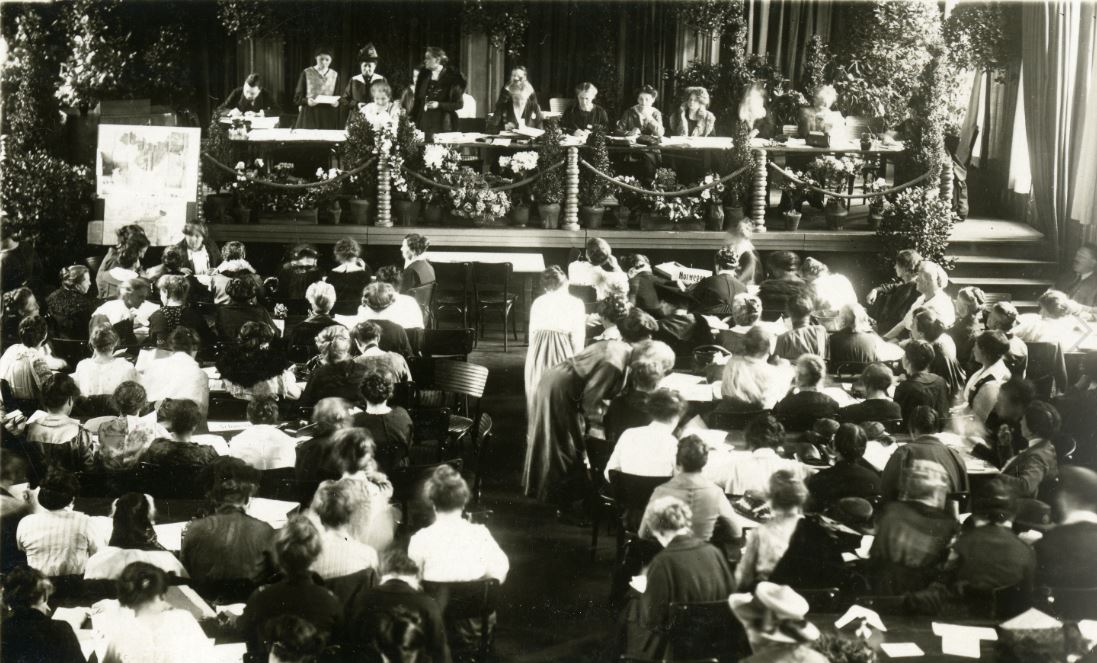
1919 delegates

When the WILPF women met in Zurich in May 1919 they were shocked to hear of the starvation of peoples in the defeated countries, and see the evidence in the bodies of the emaciated German and Austrian women – they sent a telegram to Paris, urging that the food blockade be lifted immediately.

And when the terms of the Peace Treaty were published, the women sent another telegram criticising the terms of the Treaty: the women said it would bring ‘discord and animosities all over Europe which can only lead to future wars’. To reinforce their criticisms, they sent six international delegates (including Charlotte Despard and Chrystal Macmillan of Britain) to lobby the men of the Paris Peace Conference. But the women’s resolutions and advocacy of mediation to reach a just peace settlement were ignored.

The women in Zurich last week, in May 2019, were determined that the work of these brave women should be acknowledged and honoured. A gathering of 200 international women met to commemorate the centenary of the WILPF 1919 Congress in Zurich. In 2019 we remembered the resolutions passed by the women in 1919, and sadly acknowledged that there is still much work to do as militarism and self-interest continues to hold sway in political and diplomatic thinking – and little thought is being paid to planning for the likely upheavals and movements of people due to climate change.

How did these WILPF documents arrive in TUC Library? Perhaps, they originally belonged to Ellen Wilkinson who was a member of WILPF and one of the British delegates in Zurich in 1919.

Helen Kay
20 May 2019

For more details of 2019 WILPF project to commemorate 1919, see https://womenvotepeace.com


Induction of new Pro-vice-chancellor for Research, Prof Don MacRaild

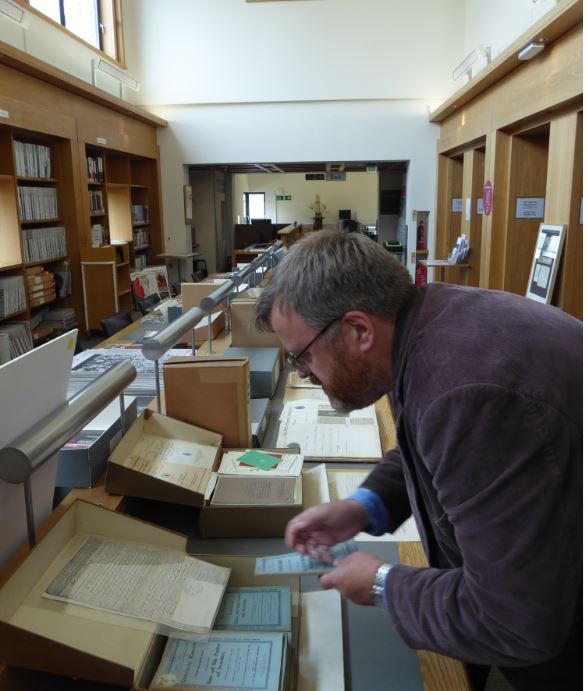
Don MacRaildJeff invited the new Pro-vice-chancellor for Research Prof Don MacRaild to visit the TUC Library this morning. Don was shown a variety of the Library’s archive collections on the themes of the history of industrial health, equal pay, abusive forms of labour (flower making/sweated labour in the Gertrude Tuckwell Collection), worker’s education (reports of the first WEA Rochdale tutorials),

Tawney's Rochdale notebook

international labour relations (the early Russian delegations and American fraternal relations), the fight against fascism in Britain (Labour Research Department’s coverage of the British Union of Fascism and League of Empire Loyalists), and industrial relations and action (the General Strike, Grunwick strike and 84/85 Miners’ Strike).

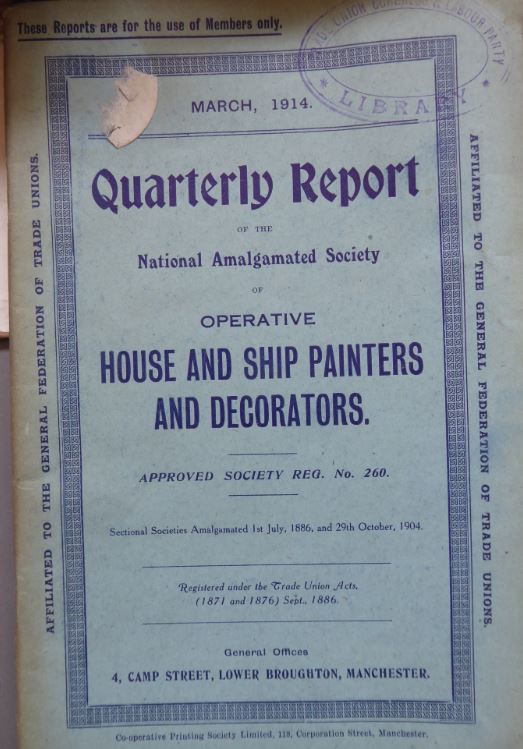
Don’s favourites were the periodicals of the House and Ship Painters and Decorators Union from the early 1910s, where we found representation from Don’s hometown of Barrow-in-Furnace.

Ragged Trousered Philanthropists – Part 2

Front page of manuscript

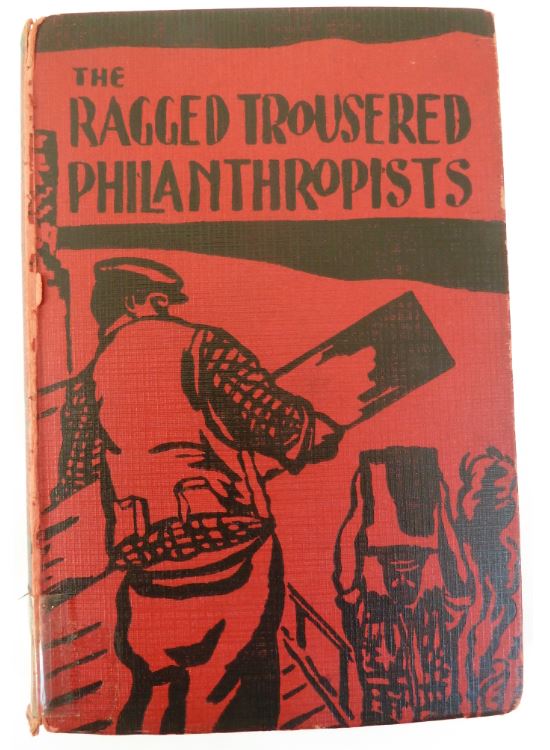
After Tressell’s death in 1911, his daughter Kathleen moved to London and worked as a children’s nurse. Whilst working for one employer she was fortunate to come into contact with a journalist Jessie Pope who had worked for Punch. Jessie was persuaded to look at the manuscript and was so impressed she showed it to the publisher Grant Richards. Kathleen was persuaded to sell the manuscript outright for £25. Jessie Pope edited the manuscript from 1700 pages down to 1000 in line with contemporary literary fashion (according to Fred Ball). The book sold well and a shorter, more affordable trade union edition was published afterwards at 700 pages (see 1927 edition published by The Herald and Richards Press).

Front cover

The original manuscript passed through several hands before being acquired by Tressell’s biographer, Fred Ball, in 1946. Fred with the help of his wife Jacquie painstakingly put the two parts of the manuscript back together, and recorrected Jessie’s editing (using a mirror and kettle in some cases). You can see a full description of how Fred tracked down the manuscript and put it back together in its original format on our website). A full text edition was finally published in 1955 by Lawrence and Wishart.

The manuscript was then bought by the National Federation of Building Trade Operatives (NFBTO), and presented to the Trades Union Congress the following year.

Tressell’s most recent biographer Dave Harker, has estimated the novel has had 117 printings in the UK, printings in Canada, Australia, the USA and Russia, and translated printings in Russian , German , Dutch, Polish , Slovak , Czech , Bulgarian (reportedly) , Japanese , Persian , Chinese , Korean , Turkish  and Spanish various plays (the most famous being Stephen Lowe’s version), radio programmes, TV films, tapes and CDs.

Many people have praised the Authenticity of the novel. In his preface to the novel Robert Tressell says In writing this book my intention was to present, in the form of an interesting story, a faithful picture of working class life…The work possesses at least one merit – that of being true. I have invented nothing. There are no scenes or incidents in the story that I have not either witnessed myself or had conclusive evidence of.

In the introduction to the 1927 edition George Hicks, General Secretary for the NFBTO and President of the TUC wrote Tressell has caught the spirit, the tone, the soul of working-class life more than any other writer of his time. What he has described is true to life: we know he lived it. We workers in the building industry know he was one of us.

Tony Benn described it as a torch to be passed from generation to generation. A sentiment that’s been echoed by others like Tom Watson and Len McLusky. My dad enthused about its authenticity and recommended it to me, and I read it as a teenager; its injustices angered me and inspired me and it still does. It’s a remarkably powerful novel that I’m proud is in the TUC Library.

In the introduction to the 1965 edition playwright Alan Sillitoe claimed the book had haunted him ever since reading it. He said the reader could get many things out of it “a bolstering of class feeling; pure rage; reinforcement for their own self-pity; a call to action; maybe a good and beneficial dose of all these things.

Jeff, John and Ian

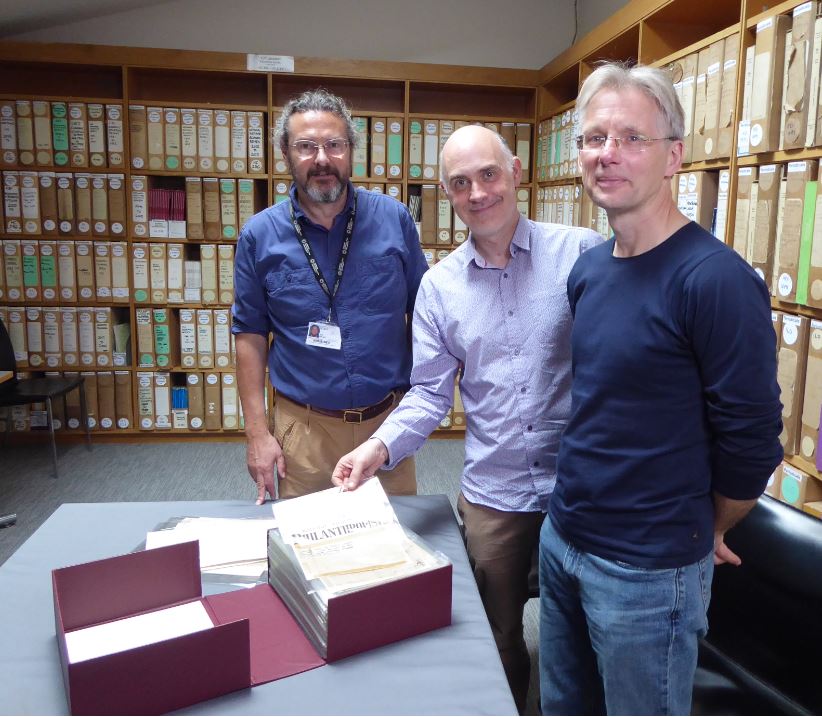
Just finished filming in the TUC Library for a documentary that includes the manuscript of the Ragged Trousered Philanthropists to be shown on BBC2  sometime later this year (2019). Photo L to R – myself (Jeff Howarth, TUC Library), director John Mullen and academic Ian Haywood of Roehampton University).

Manuscript of the Ragged Trousered Philanthropists – Part 1

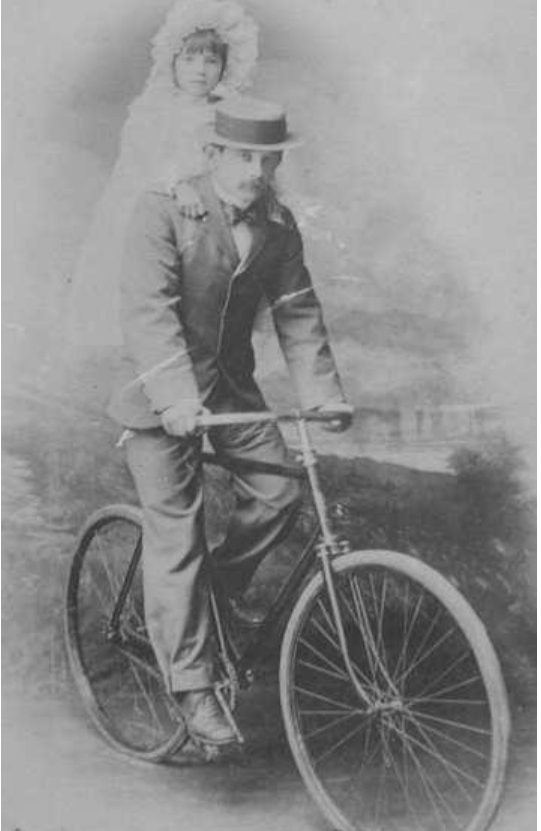
Robert and Kathleen Tressell

Robert and Kathleen Tressell. Copyright The Robert Tressell Family Papers

The TUC Library is fortunate to have the manuscript of the seminal novel The Ragged Trousered Philanthropists (RTP) in its archives and we’ve had a lot of interest shown in it recently with visits from the Irish Embassy; author (and the University’s new Pro-Vice Chancellor for Research) Prof Don MacRaild, and historian Paddy O’Sullivan; as well as from a television production company interested in filming it for a documentary.

The manuscript was digitised and is available for research on our website The Union Makes Us Strong 

I thought it might be of interest to remind our audience of the remarkable life of Robert Tressell in a series of posts.

Robert Tressell was the pseudonym adopted by Robert Noonan., born in Dublin in 1870 with six brothers and sisters. Recent research by Bryan MacMahon indicates that he was probably taken to live in London with his mother when he was young for several years, before moving to live in Liverpool. He emigrated to South Africa in the late 1880s as a young adult and worked as a decorator and sign writer, a highly skilled and well paid job. He married Elizabeth Hartel in Cape Town, and lived in Johannesburg. Daughter Kathleen was born a year later, and some years after they separated and Robert took sole responsibility for his daughter. He was a member of a trade union and politically active in the local labour party, trades council, and International Labour Party. He developed tuberculosis around 1900. He moved to Hastings with Kathleen in 1901, which was well known for its good health.

Hastings historian Steve Peak in the introduction to the centenary Hastings edition of the RTP describes Robert as short, with a slight Irish accent, an atheist, very cultured, reader of a wide variety of books, an alcohol consumer, kind to his friends and fond of cricket.

Hastings and St Leonards was a formerly genteel town with no industry, a growing problem of poverty and unemployment. This to Robert was made worse by the election in 1906 of a Conservative MP in what had been a Liberal constituency. The decline in the standard of living for the working class that followed, some have argued, provided the catalyst for Robert to start writing what would become the RTP.

He completed the manuscript in 1910, with the title The Ragged Trousered Philanthropists, Being the Story of 12 months in hell, told by one of the damned, and written down by Robert Tressell. Robert sent it to three publishers but with no success and at some point he threw it on the fire, from which Kathleen rescued it. His TB was getting worse, and he was finding it harder to get work. And so he decided to emigrate to Canada for health and economic benefits.

Robert gave the manuscript to Kathleen as a present saying “I can’t leave you money or property, but look after this, it might come in useful some day.” Soon after he left for Liverpool with the intention of finding work before getting a ship to Canada.  Kathleen never saw him again. His biographer Fred Ball says it is doubtful he thought he would make it. He was in an advanced state of TB and was admitted to the work-house hospital where he died in February 1911.

Six new interviews on our Britain at Work website

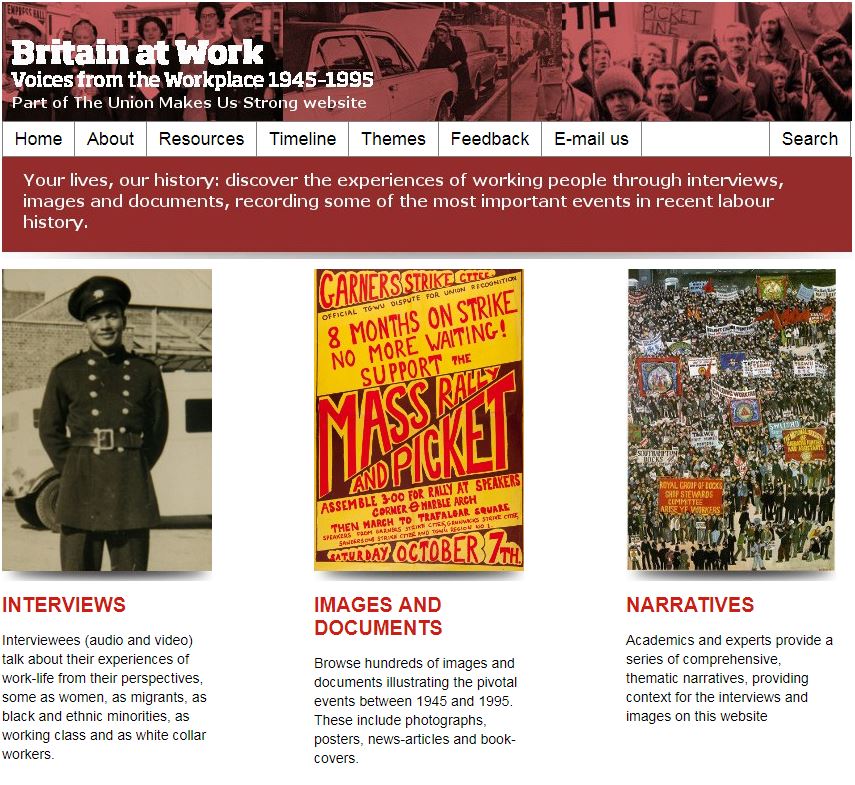
Britain at Work homepage

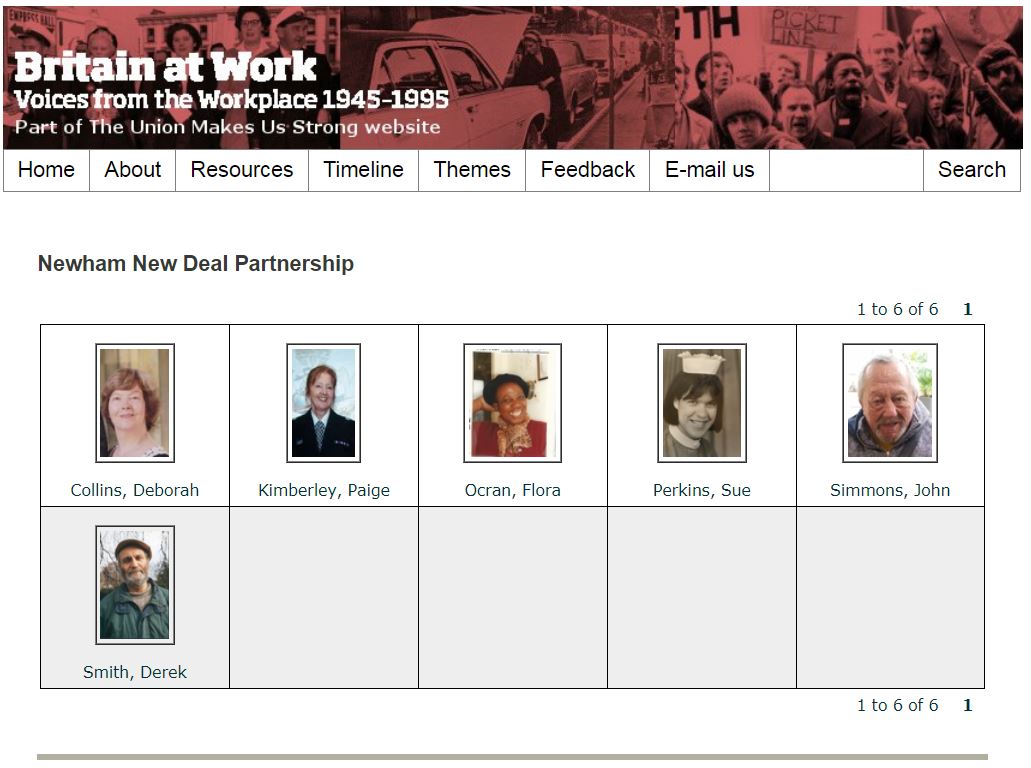
We have six new interviews on our Britain at Work website from the Newham New Deal Project. These were produced as part of the Discovering Stratford Village project, Working lives, working community, 1890-1990. They include a nurse (Flora Ocran), a journalist (Debbie Collins), an author (Derek Smith), a factory worker (John Simmons), a police officer (Kimberley Page), and a nurse and nursery owner (Sue Perkins). As with the other interviews, the oral histories consist of the complete transcript, an audio clip, portrait, and brief description of their working lives and trade union activity. The complete audio is available for research from the TUC Library.

Debbie Collins was an NUJ member from her first job in 1980 until she left Time, Inc in 2017. Deborah talks about her time in the NUJ at local newspapers, and at Wapping, about union organisation in local and national newspapers, pay disputes and strikes, and the developments in the newspaper industry. She also discusses changing technology, including the move from hot metal to direct computer typesetting.

Paige Kimberley was a member of the Police Federation, she recalls how the Police Federation supported her claim for child support, paid off her overdraft, and provided funds for a holiday. She joined the Metropolitan Police as soon as she was able to do so –at 18 and a half years of age. She rose through the ranks, via a range of posts, including spells as a Rape Investigator, and as an Inspector at Charing Cross, where she introduced the first permanent night duty, before ending up investigating crime in public order across London. She talks about uniforms, shift work and some of her roles. She discusses expectations of women police officers in the 1980s, about being a single parent at 20 and going back to study for her sergeant’s exams.

Flora Ocran was born in Ghana in 1939, and trained as a nurse there. She was always interested in nursing, and her mother used to deliver babies in the village and surrounding area. She came to the UK in 1964, and on arrival worked in a nursing home in Kent in order to qualify as a UK registered nurse. She worked in many London hospitals as an agency nurse, often doing night shifts, remitting funds to family in Ghana.

Derek Smith came to Newham in 1976 to join Soapbox Theatre as a playwright. In 1979, he helped set up a community bookshop, Page One, in West End Lane, E15, as a member of the cooperative of the same name, and stayed for three years. During that time he published the first book of poetry of Benjamin Zephaniah, who was also a cooperative member. He left the cooperative in 1982, and joined Tower Hamlets Cooperative Development Agency where he worked for four years.Subsequently he pursued his career as a professional writer, publishing a number of books. He was also the Coordinator of Forest Gate Writers’ Workshop for a number of years.He talks about the challenges of running a cooperative, and setting up Newham Cooperative Development Agency, funded by the Greater London Council (GLC).

Sue Perkins trained and worked as a nurse specialising in children., then specialized as a children’s nurse. She trained as a Health Visitor working with families and children. She was a member of the Health Visitor’s Association and discusses problems with salary re-banding. She started an independent nursery in Newham in 1989, and established a second nursery in Plaistow in 1991. She describes the development of her nurseries in East London.

John Simmons  started his working life as an office boy at the head office of the London Co-op, where he stayed for around 15 years. He then worked briefly in stock control for a chain of shoe shops, before working for Vanoppen Transport at the London International Freight Terminal, driving a fork lift truck. He then worked for Streetly Bert Chemicals, loading acid. He describes a hazardous environment there and lack of safety equipment, which he believes contributed to his ill health. He also discusses a work accident with another employer, which left him hospitalized. He reviews his job choices over the years. He was a union member whilst at the Co-op, and describes taking part in the strike there to support equal pay for women.

See more on http://unionhistory.info/britainatwork/
interviews