
This week the TUC joined a Cleaning Taskforce campaign established by the Equalities and Human Rights Commission. The campaign seeks to improve working practices in the cleaning industry and ensure that cleaners are treated with dignity and respect in the workplace.
To mark the occasion, we thought we would highlight the material in the TUC Library that documents the history of various campaigns on behalf of cleaners and domestic workers.
For much of the 19th and early 20th centuries, cleaners and domestic staff were predominantly women and they worked for private families in conditions that made union organising difficult.
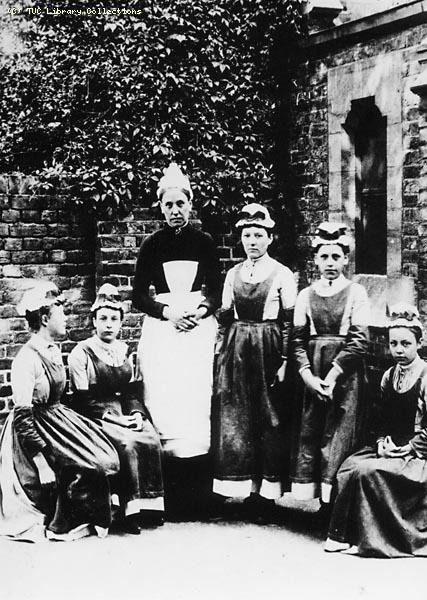
House keeper and domestic staff, c.1900
The introduction of the first rudimentary welfare reforms in the early 20th century were often paternalistic and accepted a ‘male breadwinner’ model of the labour market. The Unemployment Insurance Act 1920 specifically denied benefits to women who had rejected domestic service. In response the National Federation of Women Workers organised a demonstration and set up its own benefits scheme for its members.
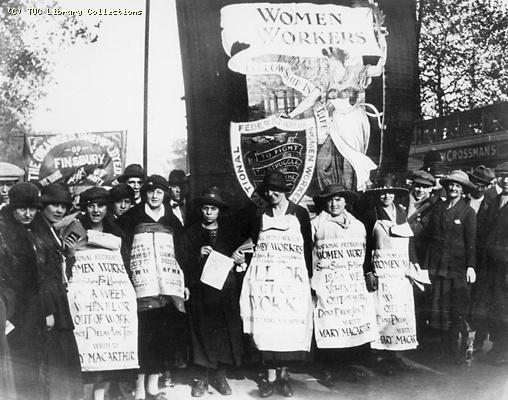
National Federation of Women Workers demonstration, 1920.
In 1938 the TUC established the National Union of Domestic Workers, administered by the TUC Women’s Officer and the General Council. It existed until 1953.
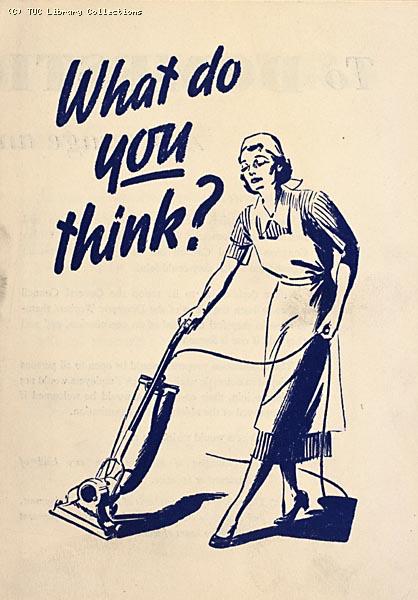
TUC leaflet for domestic workers, 1938
Despite gradual improvements to conditions in the industry, cleaners still remained generally low paid, non-unionised women.
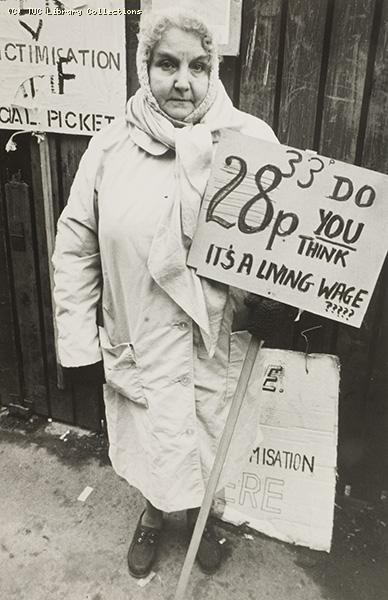
A strike by cleaners at St Anne’s College, Oxford University, 1972
A victory in the struggle for equal pay for women had been won with the passing of the 1970 Equal Pay Act, but it took many years for the benefit of the legislation to be felt by women and to this day there is still on average a 15-20% ‘pay gap’ between men and women. The cartoon below, from 1982, shows a cleaner discovering that the issue of equal pay has been ‘swept under the carpet’.
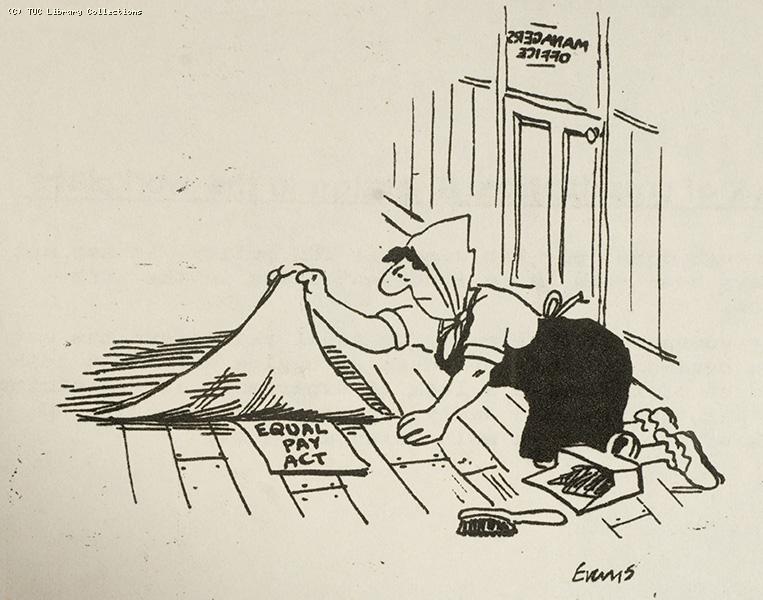
Cartoon, by Evans, 1982
The special issue of ‘Community Action’ from 1984, below, an independent magazine for public service users, highlights issues of low pay and conditions for cleaners. It also investigates the effects of the emerging trend for outsourcing and privatisation of cleaning services.
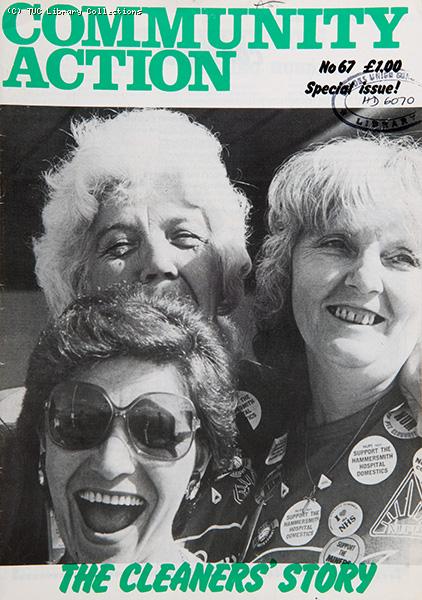
The Cleaners’ Story, Community Action magazine, 1984
In 1987 an International Cleaners Conference took place in Brixton, with topics of discussion including health and safety, racism at work and issues for migrant workers, etc.
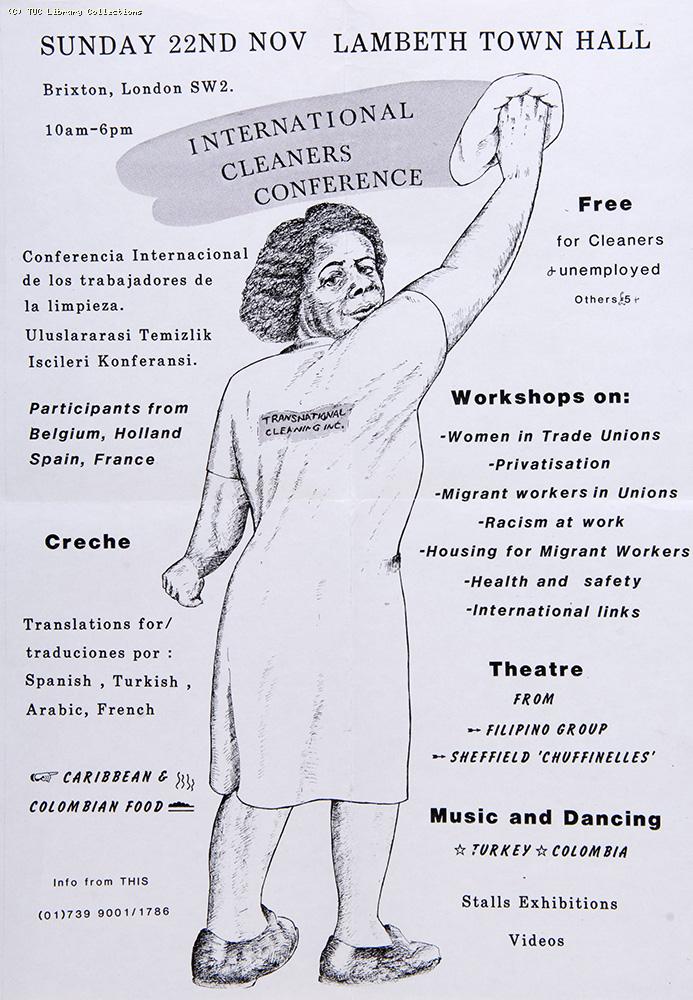
Poster for the International Cleaners Conference, Lambeth Town Hall, November 1987
The TUC continues to produce research on issues of precarious and vulnerable work in industries including cleaning, such as the publication below.
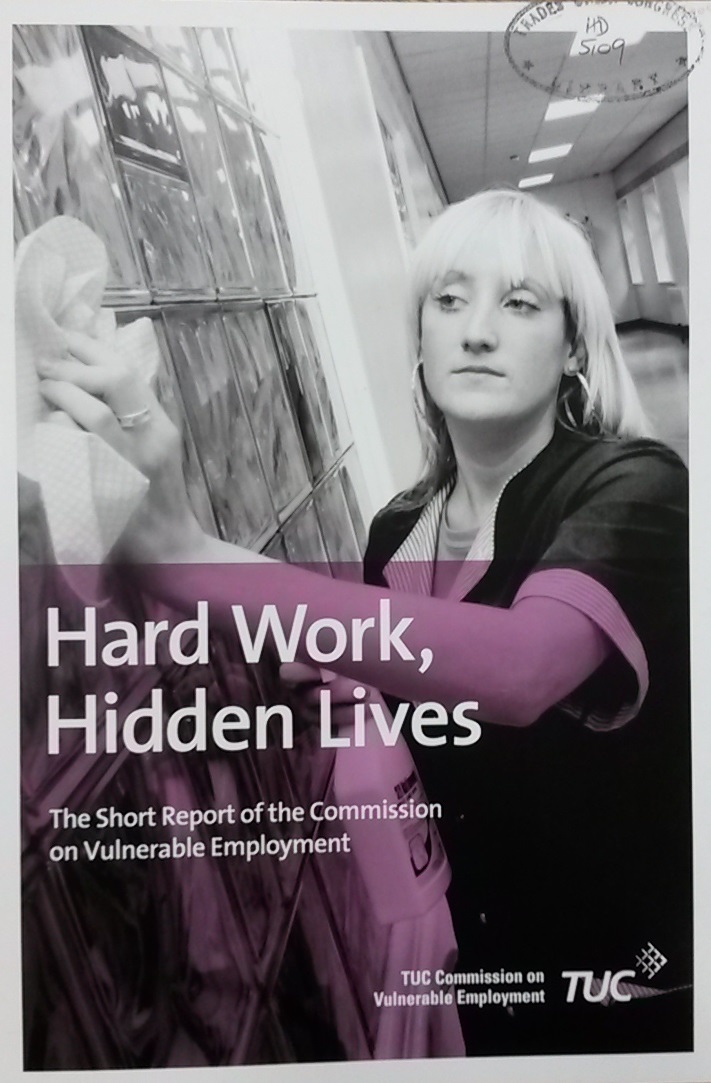
The report of the TUC’s Commission on Vulnerable Employment, 2008
These items are just a small selection of the material in the TUC Library on the subject of the cleaning industry. To find out more, or arrange an appointment to visit, get in touch.