
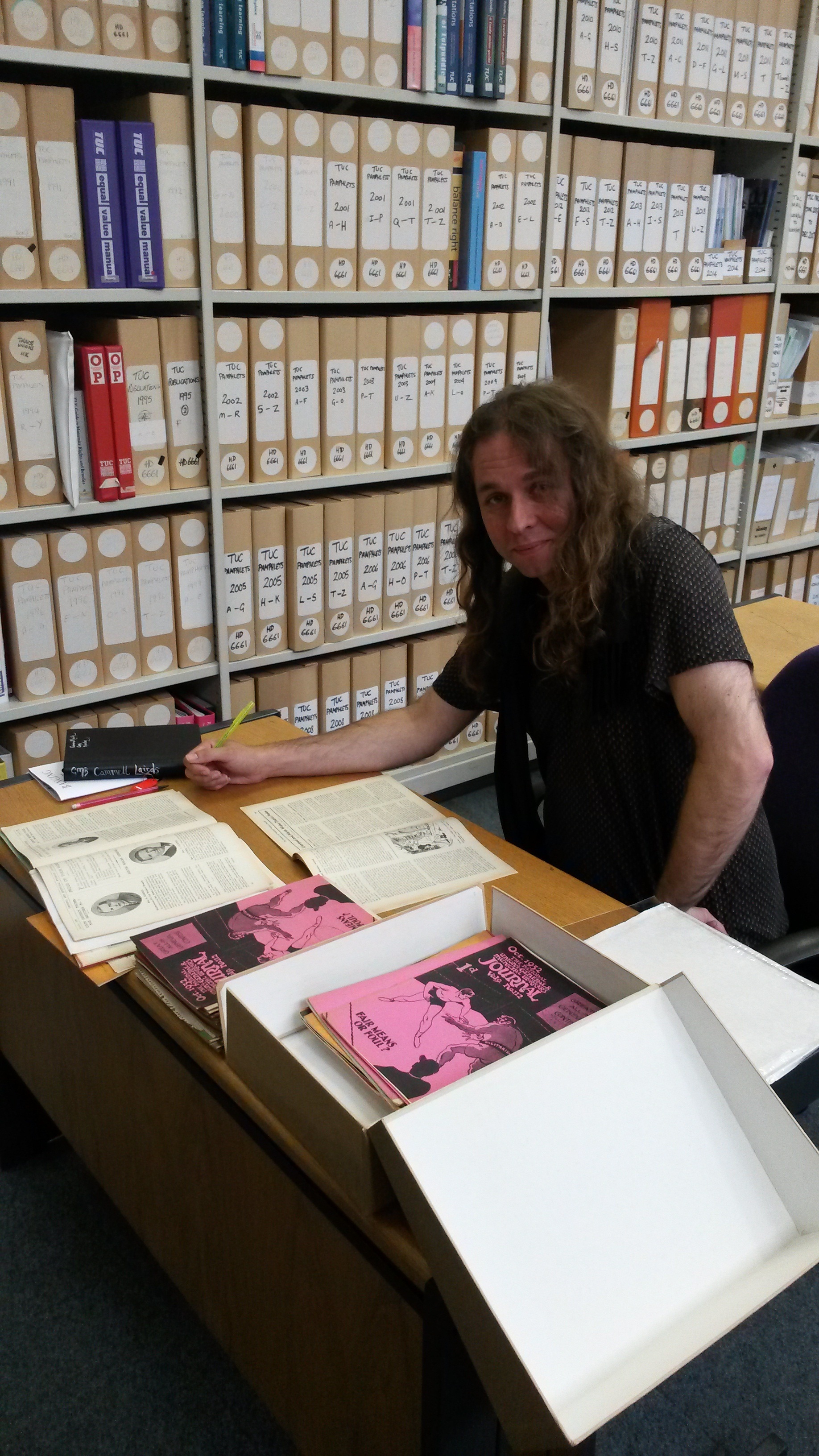
Dr John Callow consulting the GMB’s union journal
Dr John Callow, writer, historian and National Officer at the GMB union recently visited the library to undertake research using our collection of the union’s journal.
We’re delighted that John has very kindly written a guest blog post describing his research:
“The GMB cares about its history; and there is no better place to start uncovering the stories of the women and men who fashioned the union than the TUC Library.
You can tell a lot about the union’s trajectory, and over-riding priorities, just by looking through the pages of its journal. Sometimes it is ambiguous, or doesn’t tell you what you want – or even what you want to hear – but if you accept its cadences and concerns then there is no surer guide to the history of industrial struggle as it was actually lived, and acted.
For a brief window, in the early 1930s, the journal was transformed from a rather dry account of executive decisions and financial balances into a mirror of the age: with bold modernist design, colourful covers, discussion pieces, letters columns and regional pages. It coincided with a changing union and a changing political landscape. The old guard – Thorne, Trevanion, Clynes and Jones; the giants who had founded the union – were on the point of retirement; unemployment and the Means Test bit at the workers’ pocket, while the creation of Ramsay MacDonald’s National government and the rise of fascism, both at home and abroad, threatened to undermine optimism in a Socialist future and to destroy the foundations upon which trade unions, and civil society, were built.
As a consequence, the journal campaigned against the Blackshirts on the streets of London; spoke-out against the gassing of Ethiopian tribesmen by Mussolini’s airforce; and consciously framed arguments against racism. At the same time, it recorded the simple pastimes and extraordinary heroisms of its members; the strong sense of regionalism and federalism that characterised the union’s culture; and managed to name-check Shelley, Hampden, and Thomas Muir of Huntershill as easily – and breathlessly – as it reported upon parliamentary proceedings and gains in local council elections.
There is nothing more democratic than a library, which sets neither limit nor cost in the way of knowledge. When conjoined with the practical goals of trade unionism, to realise not only economic and social equality but also the full potential of each and every individual; the sky really is the limit. Knowledge is still power, and the TUC Library stands uniquely positioned as both power-house and treasure trove.”
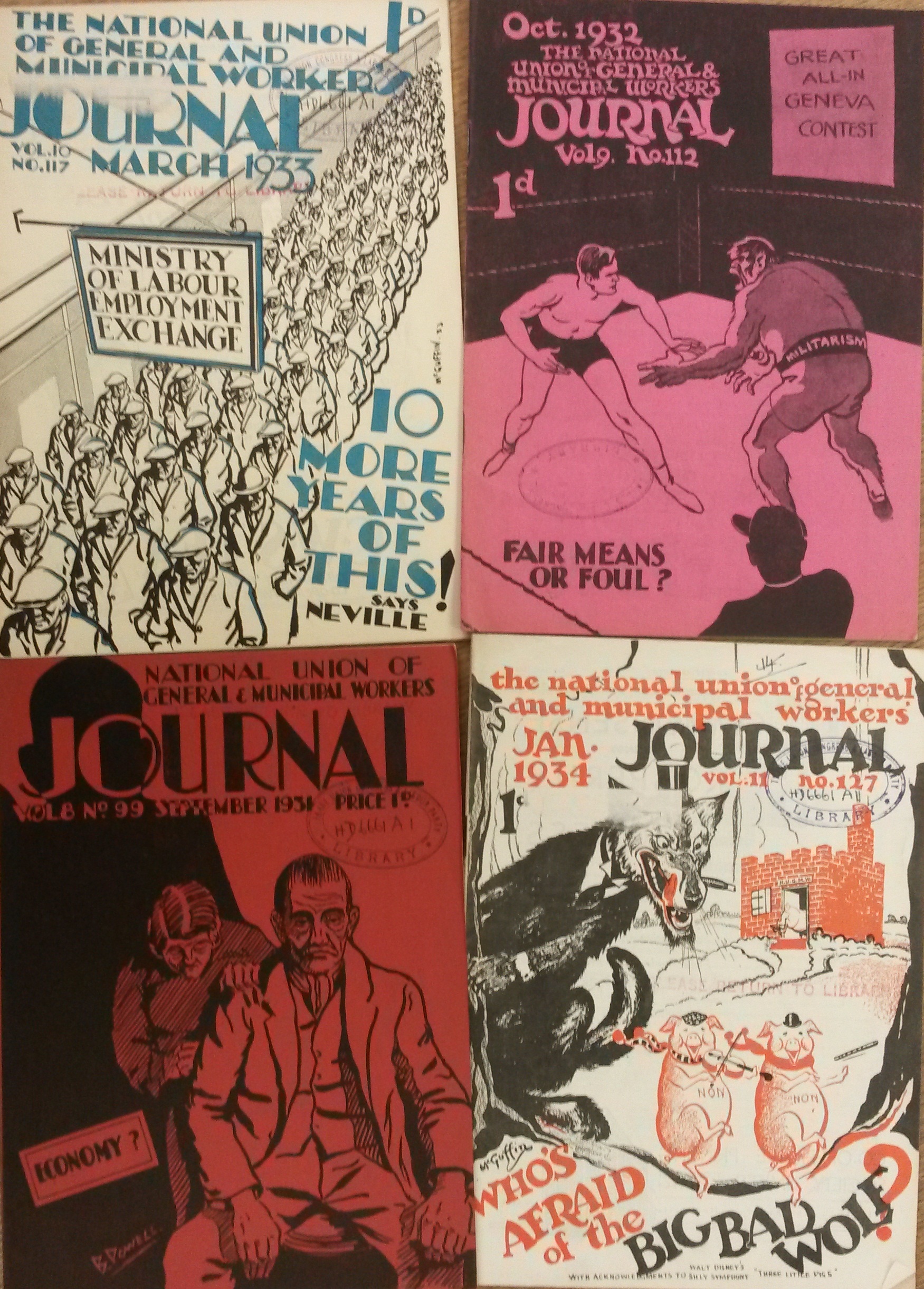
A selection of National Union of General and Municipal Workers (now GMB) journals from the 1930s