
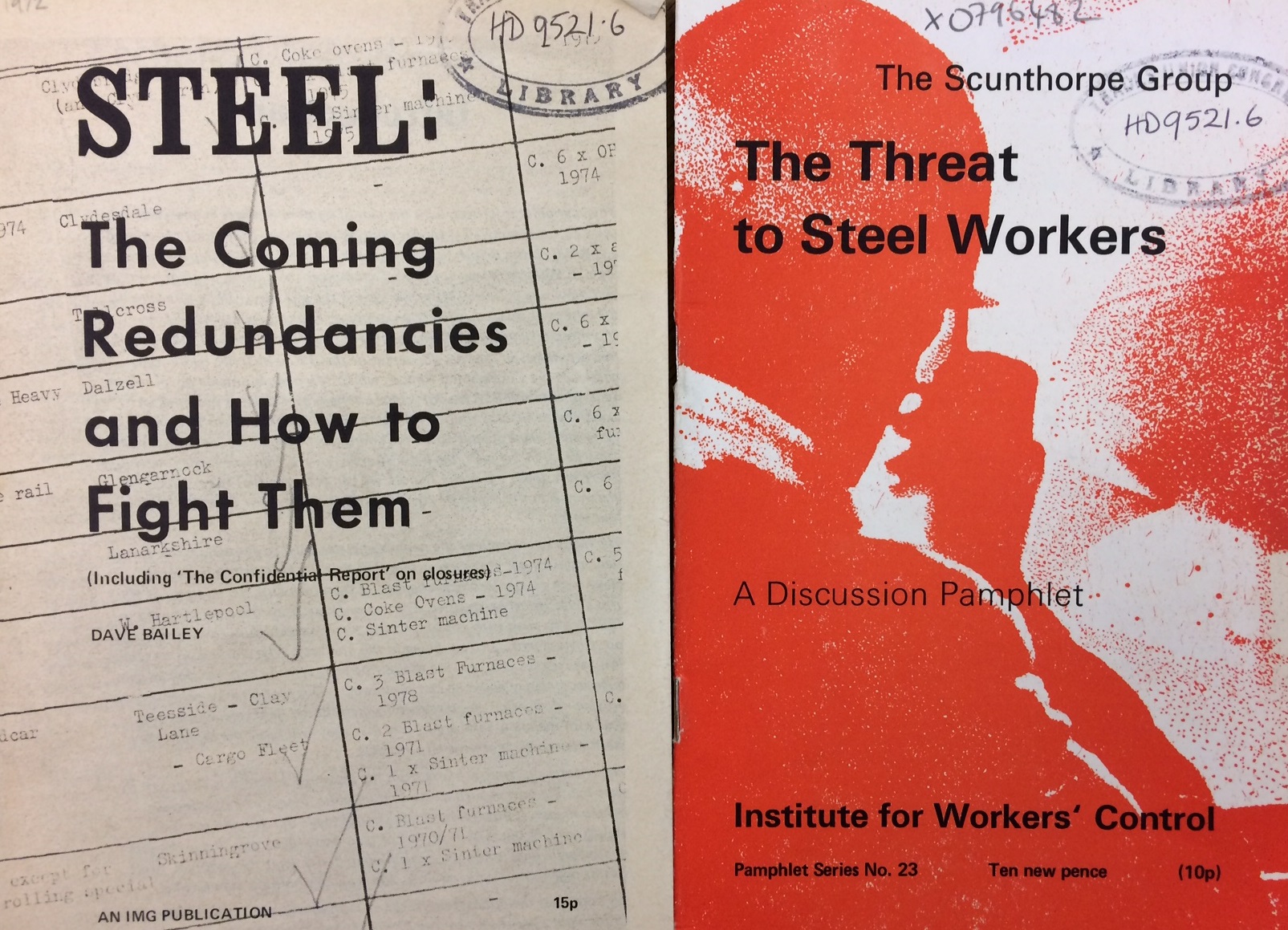
Two pamphlets from the early 1970s, discussing proposed redundancies in the industry
Following the news that Tata are to sell their UK steel business, there has been much discussion of the future of the industry, including calls for nationalisation.
The TUC Library holds a unique collection documenting the history of the industry, its unions and its workers, including successive waves of nationalisation and privatisation.
After the Second World War attention turned to how to reconstruct the steel industry for peacetime production. The pamphlet below was produced in 1944 by the Iron and Steel Trades Confederation, the union representing workers in the industry.
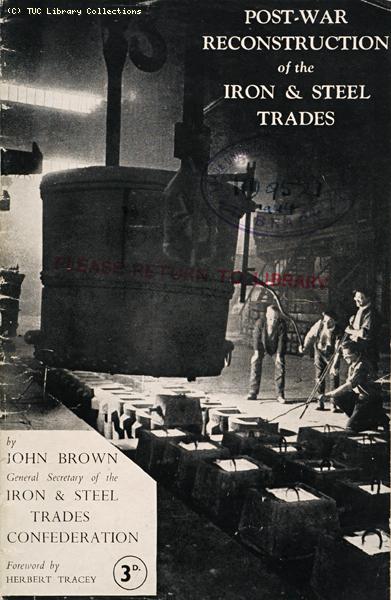
Iron and Steel Trades Confederation pamphlet, 1944
As part of the Marshall Plan for European reconstruction after the war, funds were provided by the USA to rebuild the industry. The photo below shows Marshall Aid steel machinery being installed at Port Talbot, South Wales in 1949.
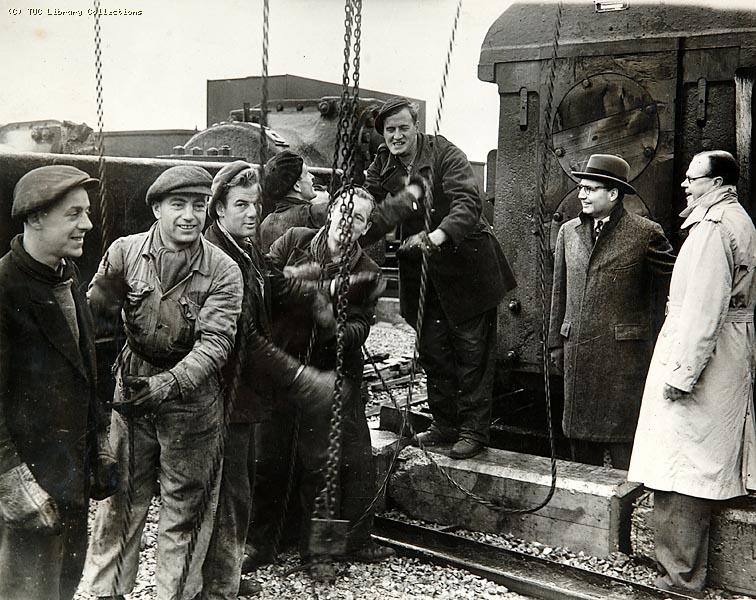
Steel machinery being installed at Port Talbot under the Marshall Aid scheme, 1949
In the immediate post-war period there was debate as to whether the industry should be nationalised, as can be seen from the pamphlets below, all produced in the late 1940s.
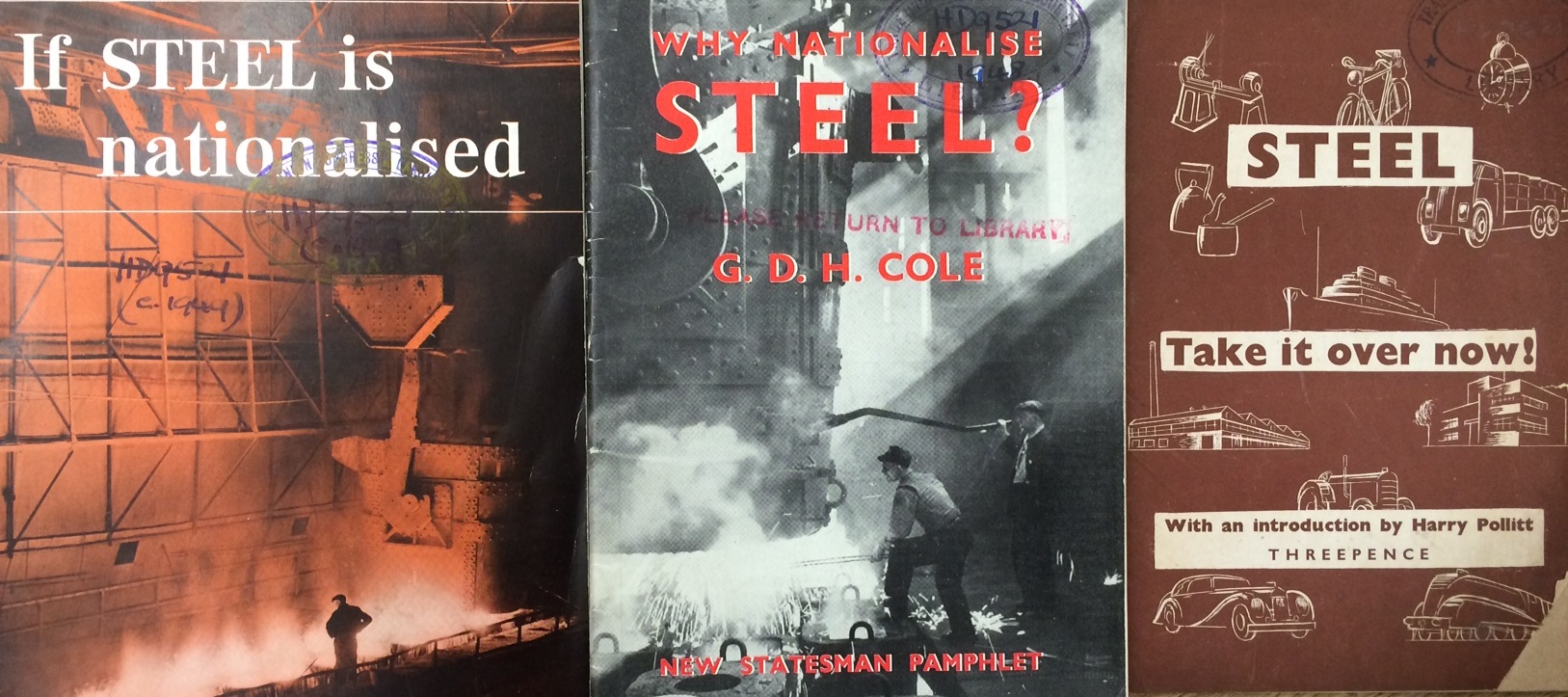
A selection of pamphlets on the nationalisation debate, late 1940s.
In 1949 the Labour Government nationalised the industry, creating the Iron and Steel Corporation of Great Britain. However, the Conservative Party opposed the nationalisation and when they were returned to power in the 1950s they began the process of returning it back to the private sector.
The industry was re-nationalised again in 1967 by Harold Wilson’s Labour Government, forming the British Steel Corporation. Following concerns throughout the 1970s about the productivity and viability of various plants around the country (see image at the top of this post) a major strike took place in the industry in 1980 over the issues of pay and proposed plant closures.
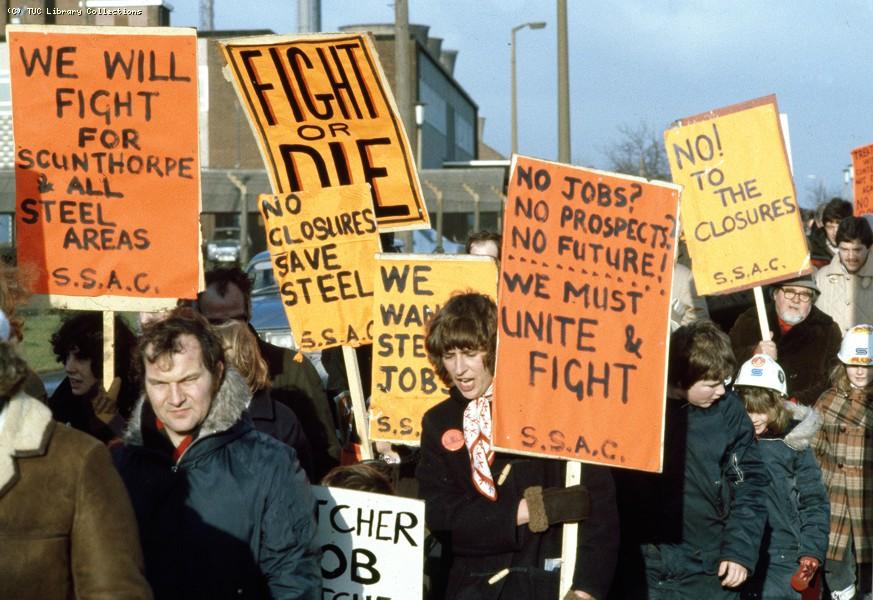
A demonstration by the Scunthorpe Steel Action Committee during the 1980 steel strike
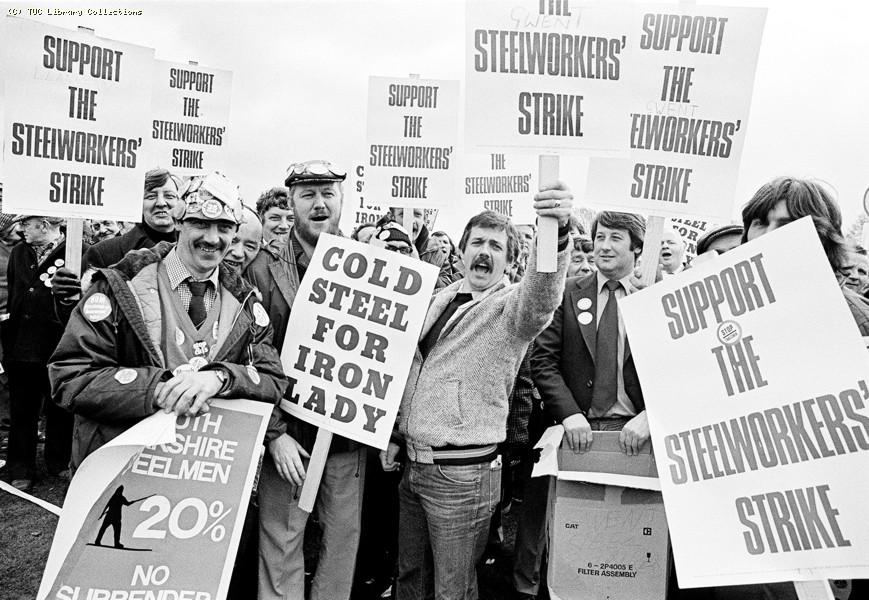
A demonstration in support of the striking steel workers, during a TUC-organised campaign against the Thatcher government’s Employment Bill, 1980.
The strike lasted nearly 14 weeks and a return to work was eventually agreed with an enhanced pay offer. Further restructuring and plant closures took place in subsequent years and in 1988 the Thatcher government fully privatised British Steel. It merged with a Duth firm in 1999 to form the Corus Group, which was itself taken over by Indian firm Tata in 2007.
For more information about what the TUC Library contains, or to arrange a visit, get in touch.